

Most workshop managers, when they look at what is slowing down their floor, go straight for the obvious things. Staffing gaps. Equipment faults. Scheduling problems.
The cleaning cloth does not make the list.
It should.
Bad workshop cleaning materials slow workers down in ways that never get tracked. No one files a report saying “lost 40 minutes today because the rags were not absorbing.” But that is exactly what happens, shift after shift, in workshops across India.
How the Wrong Cleaning Material Quietly Drains Productive Time
Here is a situation that plays out in workshops every single day.
A technician finishes working on a component. He grabs a rag and wipes it down. The grease is still there. He wipes again. Still not clean. He grabs a fresh piece, tries again. By now, he has used four rags and spent two minutes on a task that should have taken thirty seconds.
Now imagine that happening with 25 workers doing dozens of cleaning tasks each per shift. The numbers get uncomfortable quickly.
This is not an extreme example. It is what happens when workshops source cleaning cloth without thinking about actual performance on the floor. And the problem does not stop at lost time.
Workers using poor cloth are also creating problems they cannot see. Synthetic rags shed fibres that work their way into machine filters and precision assemblies. A stiff, badly processed cloth scratches painted panels and finished surfaces. These do not show up during the cleaning task. They show up at the quality inspection stage, or worse, after a machine stoppage.
Why Cotton Is Still the Most Reliable Choice in Industrial Cleaning Cloths

The rag industry has tested everything. Paper wipes. Microfibre pads. Non-woven synthetics. And most workshops keep coming back to cotton.
The reason is basic, but it matters: cotton absorbs. Synthetic fibres resist.
Cotton fibres are naturally hydrophilic. They pull oil, grease, hydraulic fluid, and coolant into the fabric and hold them there. Synthetic cloth pushes liquid sideways across the surface. In practice, that single difference changes how long every cleaning task takes.
Good industrial cleaning cloths made from pre-used cotton complete the job in one or two passes. Synthetic cloth needs four or five for the same result. Across a full shift, that gap compounds into real time.
The surface damage issue matters just as much. Synthetic cloth, especially when new, is stiff. On painted panels, polished metals, or precision-machined components, that stiffness creates micro-scratches. Cotton old dhoti, having already been softened through years of prior use, arrives with none of that stiffness. It is safe on sensitive surfaces from the first wipe.
Which Type of Cotton Cloth Actually Works Best for Each Job
Not all cotton rags are equal, and not all tasks need the same cloth. Using the right one in the right place saves time, reduces waste, and protects surfaces.
White Cotton Cloth
Best for precision work. The undyed surface shows contamination clearly, so workers know exactly when to switch to a fresh piece. Use it for:
- Component inspection before assembly
- Surface preparation ahead of painting or coating
- Quality control stations where cleanliness cannot be compromised
Colour Cotton Cloth
Better suited to high-volume daily cleaning. The dyed surface masks staining, so each piece stays usable for longer during routine operations. Tool wipes, machine exteriors, floor maintenance, and general surface cleaning.
Cutting Cloth
For heavier tasks. Workshop floors with metal shavings, machine exteriors with thick grease build-up, and any surface that needs durability in the cloth. More durable weave, still absorbent enough for demanding work.
Matching the cloth to the task reduces the number of pieces used per job. That stretches monthly spending further without any drop in what actually gets cleaned.
What Sorting Does for Cleaning Performance
This is the part most procurement decisions completely miss.
The quality of a batch of cleaning cloth is only as good as how it was sorted before it left the supplier. A poorly sorted batch means inconsistency. Some pieces work. Some do not. Workers figure this out on the floor by going through pieces until they find one that performs. That is a waste, and it happens every time.
A properly sorted batch is different. Every piece has a consistent texture. Sizing is uniform. Lint is low because loose fibres have already shed through prior use. No odour, no rough patches, no guessing which piece will actually absorb.
When every piece in the batch performs the same way, workers stop hesitating. They pick up the cloth, do the job, and move on. That is what fast work looks like on the floor.
This is also why sourcing from experienced old dhoti suppliers in Delhi who document their sorting and quality-check process matters more than it appears to be from a purchase order. The process behind the supply is what determines what actually happens in your workshop.
The Case for Pre-Used Cotton in Reducing Workshop Downtime
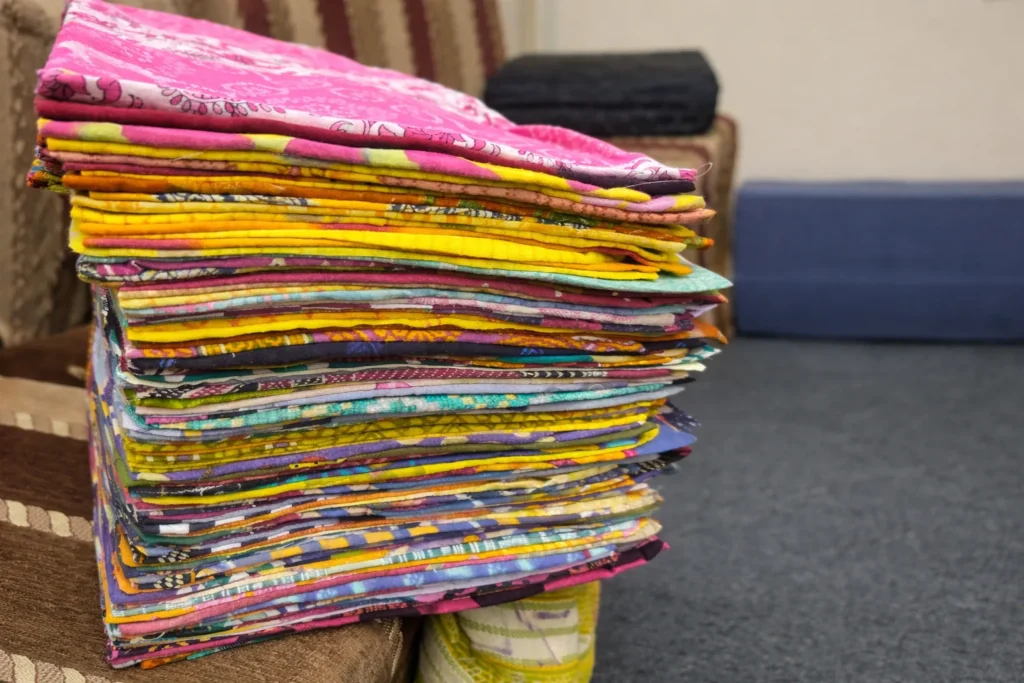
There is a reason the old dhoti for workshop cleaning has been the standard in Indian workshops for decades. It is not a habit. It is performance.
Original cotton dhotis were woven to be soft, absorbent, and durable through repeated washing. When repurposed for industrial cleaning, those same properties translate directly into workshop advantages.
Because the fabric has already been through real-world washing cycles, it arrives pre-softened. No break-in period. The fibres are already stable, which means lower lint from the first use and no risk of scratching sensitive surfaces.
For workshops supplying automotive OEMs where cleanliness standards are strict, this matters more than most buyers initially realise. A procurement manager who has dealt with a contamination rejection from a client understands very quickly why the cleaning material in use is not a trivial decision.
Reclaimed cotton also carries an increasingly relevant sustainability benefit. Material that would otherwise become textile waste is sorted, cleaned, and given a second useful life. For businesses tracking ESG commitments or reporting to OEM partners with sustainability requirements, this is a real, documentable benefit, not a marketing claim.
Practical Changes That Cut Downtime Starting Now
No large-scale overhaul needed. These changes make a real difference immediately.
Audit cloth consumption per task. If workers are using more than two pieces for a standard cleaning wipe, the cloth is underperforming. That is the signal.
Assign cloth by work zone. White cotton for inspection and precision areas. Colour cotton for general maintenance. Cutting cloth for heavy-duty surfaces. One change. Immediate reduction in waste and task time.
Keep buffer stock. Running out mid-week forces improvisation. Workers use whatever is available, performance drops, and the floor suffers. Two weeks of normal consumption as a standing buffer stock solves this entirely.
Ask your supplier about their sorting process. A reliable supplier has clear, specific answers about how they sort, check texture, verify composition, and ensure cut consistency across every batch. If they cannot explain the process, the batch quality will reflect that.
Frequently Asked Questions
Q1. How exactly does the cleaning cloth cause workshop downtime?
When cloth absorbs poorly, workers need more passes per task and more pieces per job. Over a full shift, that time loss adds up significantly. Beyond slow cleaning, synthetic or unsorted cloth sheds fibres that settle into machine filters and assemblies, which leads to contamination problems and unplanned stoppages. Stiff cloth causes surface scratches that create rework at inspection. Each of these is a direct hit to productive time.
Q2. Why do experienced procurement managers keep coming back to old dhoti for workshop cleaning?
Pre-used cotton has already been softened through washing cycles. It arrives at the workshop gentle on surfaces, low on lint, and ready to absorb from the first use. The performance is consistent and predictable in a way that new synthetic alternatives are not. Procurement teams who have measured actual cleaning outcomes, not just purchase price, find cotton cloth delivers more usable work per piece and at a lower total cost per task.
Q3. What should I check before placing a bulk order with old dhoti suppliers in Delhi?
Four things. Texture: it should feel soft, not stiff. Smell, neutral, no harsh storage odour. Cut consistency, uniform sizing throughout the batch. Composition clarity: The supplier should tell you clearly whether the batch is pure cotton or a mix. A trustworthy supplier answers all four without hesitation and can explain how they check each batch before it ships.
Q4. Does the type of cotton cloth really matter that much, or is any cotton rag fine?
It matters. White cotton on a precision component shows contamination clearly, so workers know when to change pieces. Colour cotton on a high-volume general task keeps each piece usable for longer. Cutting cloth on heavy surfaces avoids tearing mid-job. Using the wrong type of waste cloth slows down tasks and, in some cases, damages surfaces. Matching the variant to the task is a small change with a measurable effect.
Q5. How do industrial cleaning cloths affect the lifespan of machines and equipment?
Synthetic or poorly sorted rags shed microfibres during use. Over time, these settle in filters, seals, and precision assemblies. The effects are clogged filters, contaminated components, and unplanned maintenance stops that pull machines offline at the worst times. Well-sorted cotton cloth, particularly pre-used material with stable fibres, sheds far less and keeps equipment running cleaner over time.
Final Word
Every workshop has downtime. Some of it is unavoidable. But a significant portion of it traces back to decisions that look minor until you actually measure the impact.
Cleaning clothes is one of them. It is in workers’ hands constantly, on every task, across every shift. When it performs, things move. When it does not, the floor slows down in ways that no one quite names but everyone feels.
Getting the right workshop cleaning materials in place is not a big project. It is a sourcing decision. And once it is made correctly, the difference shows up fast.
Shiv Enterprises has been supplying quality-sorted cotton cleaning materials to India’s leading industries since 1987. Consistent quality, fair pricing, and delivery that does not hold up your production schedule.