
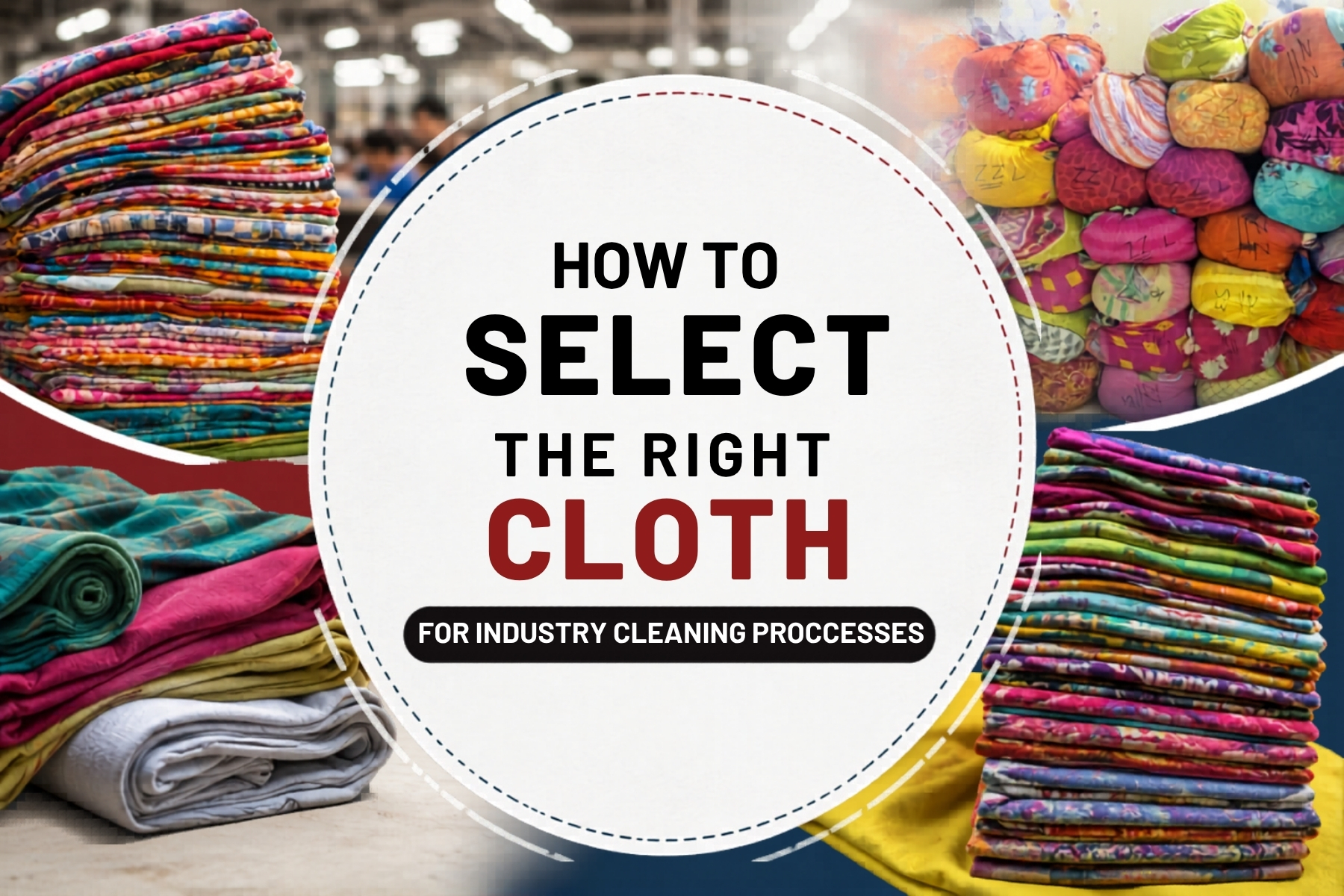
Most procurement managers do not think twice about the cleaning cloth they order. They find something that works, place a repeat order, and move on to bigger decisions.
That approach costs more than it saves.
The wrong cleaning cloth slows down workers, damages surfaces, leaves lint in precision components, and quietly adds to monthly operating costs in ways that are hard to trace back to the source. Choosing the right industrial cleaning cloths for each task in your facility is one of those small decisions that has a surprisingly large impact on how smoothly everything runs.
This guide breaks down exactly how to make that choice.
Why Industrial Cleaning Cloth Selection Actually Matters
It is tempting to treat all cleaning cloths as the same category. Clothes are cloth, the thinking goes. Just buy in bulk and distribute.
But consider what cleaning cloth actually does in a working facility. It contacts engine surfaces, absorbs hazardous fluids, handles precision-machined components, and sometimes goes near freshly painted panels. The material doing that work affects the outcome of every one of those tasks.
The wrong clothes can:
- Leave lint deposits in filters, seals, and moving parts
- Scratch polished or finished surfaces during routine wipe-downs
- Fail to absorb properly, spreading fluid instead of removing it
- Create additional cleaning passes, adding time across every shift
None of these problems is dramatic on its own. Collectively, across a full team working multiple shifts, they add up to real inefficiency and real cost.
Understanding What Different Industrial Cleaning Cloths Are Made For
Not all cleaning cloths are built for the same job. The material, the weave, and the prior use history of the cloth all determine how it performs in a specific application.
Cotton vs Synthetic: The Core Difference
Cotton is hydrophilic. Its fibres absorb liquid on contact and hold it inside the fabric. Synthetic fibres do the opposite. They push liquid sideways across a surface rather than pulling it in.
In a workshop dealing with oil, grease, coolant, and hydraulic fluid, that difference matters enormously. Cotton handles most industrial fluids in one or two passes. Synthetic cloth often takes four or five passes to achieve a comparable result, if it achieves it at all.
For most industrial cleaning applications, cotton is the more efficient material. It does more work per piece, which means fewer pieces consumed per shift.
Pre-Used Cotton vs New Cotton
There is a common assumption that newer fabrics perform better. In the case of industrial cleaning cloth, that assumption is often wrong.
New cotton can be stiff and may shed loose fibres during its first several uses. Pre-used cotton, particularly well-processed old dhoti, has already been through extensive washing cycles. The fabric is soft, stable, and low-lint from the very first wipe.
For surface-sensitive tasks, that softness is not a minor benefit. It is the difference between a clean surface and a scratched one.
How to Match Industrial Cleaning Cloths to Specific Tasks
This is where most buyers go wrong. They purchase one type of cloth for the entire facility rather than matching the material to the specific demands of each task.
Heavy Degreasing and Engine Work
Tasks involving heavy grease, oil, and mechanical fluids need maximum absorbency. The cloth has to pull contaminants away from the surface, not just move them around.
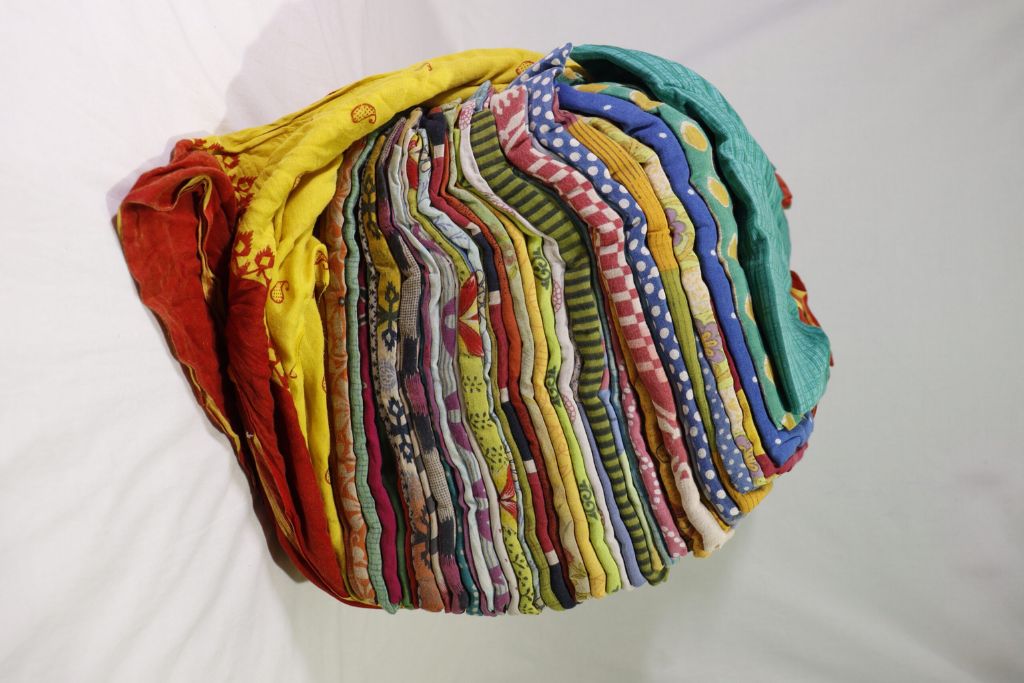
Thick, dense cotton cloth performs best here. Old dhoti for machine cleaning is well-suited for engine bays, gearbox work, and hydraulic system maintenance because the cotton construction absorbs aggressively and holds the fluid inside the cloth while the mechanic continues working.
Choosing a lightweight or synthetic cloth for this task results in more passes, more pieces used, and a surface that still feels contaminated after wiping.
Surface-Sensitive and Precision Work
For quality control stations, component inspection, and any task near finished or polished surfaces, the requirements shift. Absorbency still matters, but softness and lint behaviour become the primary concerns.
White cotton cloth is the standard choice for these applications. The undyed surface shows contamination immediately, so workers know exactly when to replace the piece. The soft, pre-washed fabric does not scratch machined or polished surfaces.
The colour of the old dhoti is less suited for this specific application because the dye can occasionally transfer onto very light or porous surfaces under pressure. For general cleaning, it performs excellently. For precision and inspection work, white is the safer choice.
Pre-Paint and Panel Preparation
Body shops and paint preparation areas have some of the strictest cleanliness requirements in any facility. A single lint fibre or contamination residue on a panel before it enters the booth results in a visible defect in the finished coat.
Well-sorted, pre-used cotton that has been processed by a reliable supplier works well here. The extended wash history of reclaimed cloth means far fewer loose fibres compared to fresh cotton. The surface leaves minimal residue and prepares the panel cleanly for coating.
General Maintenance and Floor Cleaning
Not every cleaning task requires premium cloth selection. General workshop floor cleaning, machine exterior wiping, and routine maintenance are high-volume, low-sensitivity tasks.
Colour old dhoti is an excellent choice for this category. The dyed surface keeps each piece looking usable for longer, which reduces unnecessary discard. The material is still sufficiently absorbent for general fluids while being durable enough to handle rougher surfaces like floors and machine casings.
Using the same premium white cloth for floor cleaning is both wasteful and unnecessary. Matching the cloth grade to the task keeps costs in line without sacrificing performance where it counts.

Cutting Cloth for Heavy-Duty Applications
Cutting cloth, made from reclaimed garment fabric, including sports and t-shirt material, is designed for more demanding work. It handles metal shavings, heavy grease buildup, and rough exterior surfaces more effectively than softer cotton variants.
If your facility includes lathe work, metalworking, or heavy fabrication, cutting cloth should be part of your standard supply alongside conventional cotton cloth.
The Hidden Cost of Getting Industrial Cleaning Cloth Wrong
Procurement teams often evaluate cleaning cloths purely on price per kilogram or price per piece. That metric misses the actual cost picture.
The real cost of cleaning cloth is the total operational cost it creates, not just the purchase price.
A cloth that performs poorly generates:
- More pieces consumed per shift due to insufficient absorbency
- More time per cleaning task because workers repeat the same wipe multiple times
- Rework costs when surface damage or lint contamination is discovered at inspection
- Disposal costs from the higher volume of used cloth per week
A well-sorted cotton cloth from a supplier who checks quality consistently costs more per kilogram than unsorted or synthetic alternatives. But across a full month of operations, it typically delivers lower total cost because the performance per piece is substantially higher.
When evaluating old dhoti suppliers in Delhi, the right question is not just what the price is. It is what the performance per piece is, and how consistent that performance is across every batch.
What Consistent Quality Actually Looks Like in Industrial Cleaning Cloth
The quality of cleaning cloth is not visible from a photograph or a product description. It shows up in use, and inconsistency shows up at the worst possible time, usually mid-shift when a worker is dealing with a spill or a time-sensitive cleaning task.
Here is what consistent quality looks like in practice:
- Uniform texture: Every piece in the batch feels the same. No rough patches, no stiff sections, no variation in softness.
- Neutral odour: No chemical smell, no mustiness, no indication of contamination in the processing stage.
- Consistent sizing: Cut uniformly throughout the batch. Random oversized or undersized pieces disrupt workflow and suggest poor processing standards.
- Declared composition: The supplier can clearly state what material type is in each variant, cotton content versus blended content, and which tasks each variant is appropriate for.
Suppliers who have been operating in the industrial cleaning cloth market for a significant period have these systems built into their process. They have seen what happens when quality slips and have structured their operations to prevent it.
Frequently Asked Questions
Q1. How do I know which type of industrial cleaning cloth is right for my facility?
Start by mapping your actual cleaning tasks into categories: heavy degreasing, precision and surface-sensitive work, general maintenance, and floor or exterior cleaning. Each category has different requirements. Match the cloth type to the task rather than buying one type for everything. If you are unsure, ask your supplier to walk you through the variants they stock and what applications each is designed for.
Q2. Is colour old dhoti suitable for machine cleaning tasks?
Yes, for most general machine cleaning tasks, it works very well. It is absorbent, durable, and cost-effective for high-volume use. For precision-machined surfaces or tasks where any dye transfer would be a concern, white cotton cloth is the safer choice. Colouring old dhotis for machine cleaning is a practical option for external surfaces, routine maintenance, and general workshop use.
Q3. What makes pre-used cotton cloth low-lint compared to new fabric?
New cotton fabric still contains loose fibres from the manufacturing and finishing process. These shed during initial use. Pre-used cotton that has been through multiple wash cycles has already shed those loose fibres naturally. When properly sorted and processed, it arrives in a stable state that produces far less lint during use, which matters significantly in environments with precision components or strict cleanliness standards.
Q4. How should I evaluate old dhoti suppliers in Delhi before placing a bulk order?
Request a sample batch before committing. Check four things: texture consistency across all pieces, odour neutrality, cut uniformity, and material composition labelling. Ask the supplier directly about their sorting and quality-check process. A reputable supplier will give you specific and confident answers. One without a documented process will give vague responses or avoid the question.
Q5. Can the same industrial cleaning cloth be used for both heavy degreasing and surface-sensitive work?
It is not recommended. Heavy degreasing cloth absorbs well but may be less carefully sorted for lint and surface safety. Surface-sensitive work requires cloth that is specifically checked for low-lint performance and softness. Using the same cloth for both tasks either compromises your precision cleaning or increases costs unnecessarily on your degreasing line. Separate cloth types by task category for the best outcome on both fronts.
Final Word
Selecting the right industrial cleaning cloths is not a complicated decision once you understand what each task actually requires from the material doing the work.
Match absorbency to fluid-heavy tasks. Match softness and low-lint behaviour to precision and surface-sensitive work. Use durable, cost-effective cloth for high-volume general cleaning. And always choose a supplier whose quality is consistent across every batch, not just the first sample.
Shiv Enterprises has been supplying quality-sorted industrial cleaning cloths to India’s leading workshops and manufacturing facilities since 1987. The range covers every application, and every batch goes through the same careful sorting and checking process that procurement managers across Delhi NCR have relied on for nearly four decades.