
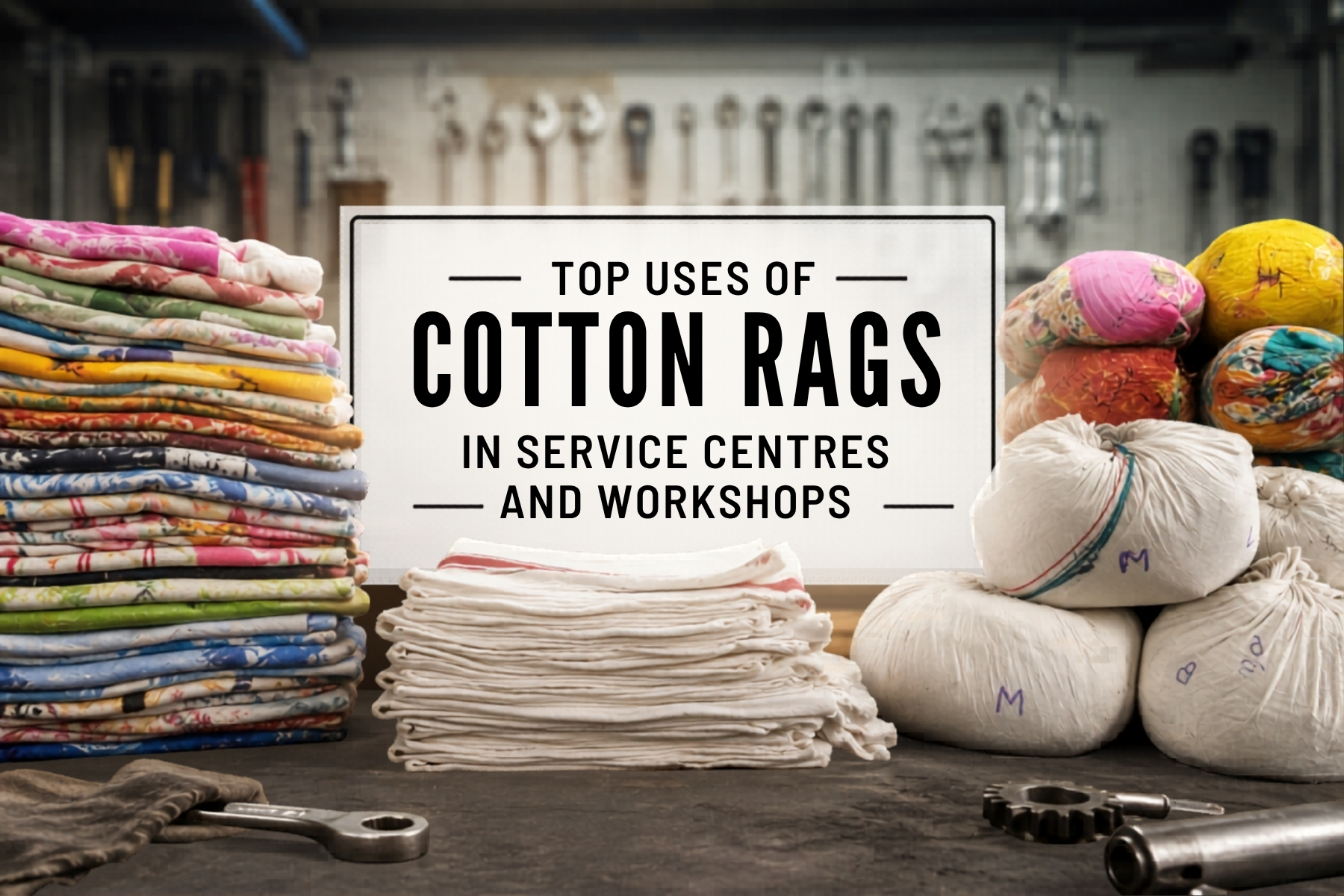
Ask a mechanic who has been on the floor for ten years what he reaches for when a job needs cleaning. He will not say paper towels. He will not say synthetic pads.
He will hold up a piece of soft, worn cotton cloth.
That answer has not changed in decades. And it has not changed because cotton rags keep proving themselves, task after task, shift after shift, in every kind of workshop across India.
This blog covers exactly where they are being used and what makes them the right choice each time.
How Cotton Rags Became the Standard Across the Rags Industry
It did not happen because of marketing. It happened because workshops tried everything else and kept coming back.
The rags industry has seen synthetic pads, paper wipes, and non-woven disposables all enter the picture at different points. Some get adopted for specific tasks. Most get quietly replaced.
Cotton keeps its place because of one property that nothing else replicates as well: it absorbs and holds. Oil, grease, coolant, hydraulic fluid, cotton pulls it in and keeps it there. Synthetic cloth pushes the same fluid sideways across a surface. That difference sounds small until you are wiping the same component four times instead of once.
Dhoti cloth carries an added advantage here. Having been through real washing cycles before reaching a workshop, it arrives pre-softened. No stiffness. No rough fibres. Ready to perform from the first use.
Cotton Rags for Engine Cleaning and Degreasing
This is where cotton cloth does some of its most important work.
Before reassembly or inspection, engine components need to be clean. Cylinder heads, valve covers, gasket surfaces, oil pan interiors. Each of these has to come out of the cleaning step without residue and without scratching.
Cotton handles both requirements. It picks up grease on contact and holds it without smearing. And because pre-used cotton arrives already soft, it does not scratch machined or polished metal surfaces the way a stiffer cloth would.
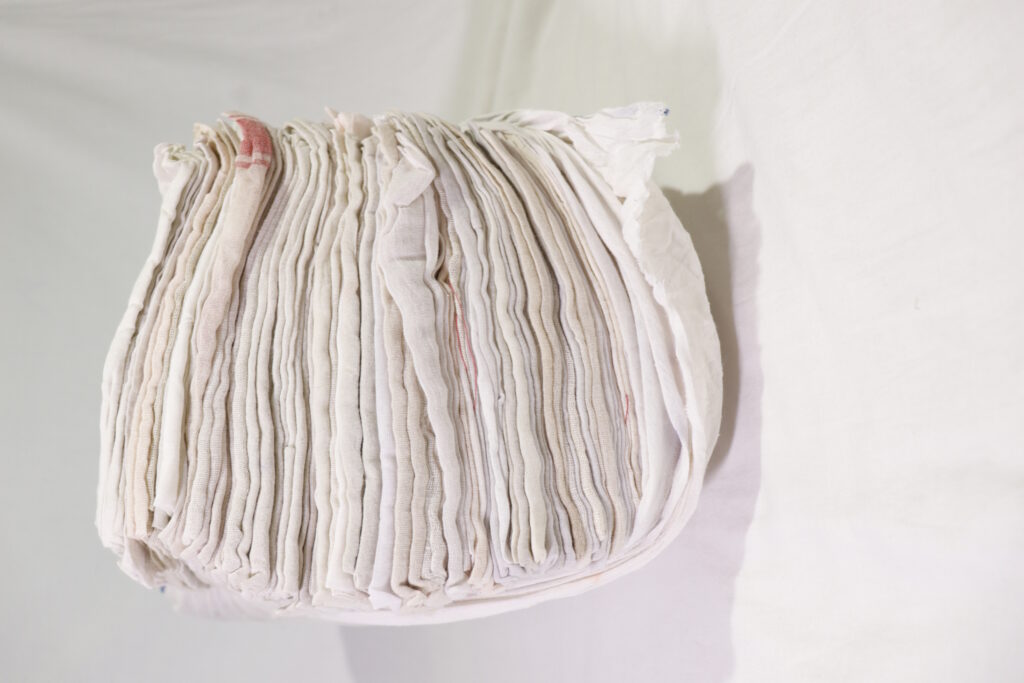
Many mechanics working on precision engine work specifically ask for cotton white old dhoti at this stage. The reason is practical. The light, undyed surface shows contamination clearly. Workers can see exactly when a surface is actually clean, not just cleaner than before.
Hydraulic and Coolant Spill Management
Spills are not occasional events in a service centre. They happen constantly, and the speed of cleanup matters.
A hydraulic fluid spill on a workshop floor is a safety issue until it is gone. A coolant leak near electrical components becomes a bigger problem the longer it sits. Cotton rags handle both quickly because the absorption is immediate. One or two passes and the surface is dry.
Synthetic cloth, by comparison, tends to move spills rather than collect them. Workers end up using more pieces, spending more time, and still sometimes leaving a residue behind.
For workshop managers tracking floor safety and shift efficiency at the same time, the cleaning material in use is not a minor decision. It affects both.
Pre-Paint Surface Preparation
Body shops know how demanding this application is.
Before a panel goes into the paint booth, the surface has to be completely clean, completely dry, and completely free of contamination. A single fibre, a residue smear, or a micro-scratch on the surface will show in the finished coat. That means rework, wasted materials, and lost time.
This is where the old dhoti for cleaning earns its reputation in the automotive finishing trade. Because the fabric has already been through extensive washing in prior use, loose fibres have already shed naturally. What arrives at the workshop is a stable, consistent material that does not deposit anything onto the surface it is wiping.
Workshops that have made the shift from synthetic alternatives to well-sorted pre-used cotton at this stage consistently report fewer paint defects. The cloth is one of the variables. Removing it as a source of contamination reduces the number of things that can go wrong.
Tool and Component Wipe-Downs Between Tasks
Mechanics wipe down tools and components constantly throughout a shift. It is one of those tasks that barely registers individually but adds up to a significant portion of working time across a full day.
Cotton rags are the practical choice here for two reasons.
First, they are soft enough not to damage machined or finished surfaces. Bearings, precision components, and newly coated parts all get handled without risk of scratching.
Second, they leave components dry in a single pass. There is no need to follow up with a second wipe or wait for moisture to evaporate. Pick up the cloth, do the wipe, move to the next task.
That kind of efficiency does not show up in any single wipe. Across a full shift with dozens of workers, it shows up in how much ground actually gets covered.
Heavy Cleaning: Workshop Floors and Machine Exteriors
Not every cleaning task in a workshop involves precision components. Some of it is straightforward heavy work.
Workshop floors collect oil drips, metal shavings, and dust throughout a shift. Machine exteriors build up grease and grime over time. Conveyor tracks and lathe beds need regular attention to keep equipment running as it should.
For these applications, cutting cloth variants made from heavier cotton construction handle the job well. They are durable enough for repeated use on rough surfaces and still absorbent enough to deal with oil and fluid buildup.
The key difference compared to using a lighter cloth is longevity per piece. Heavier cotton cutting cloth holds together through tasks that would tear or shred a finer material, which means less waste and fewer interruptions to replace worn-out pieces mid-job.
Quality Control and Assembly Line Cleaning
This is where the lint behaviour of cotton cloth becomes a serious performance factor.
At automotive OEM assembly lines and quality inspection stations, cleanliness standards have no room for compromise. A fibre contaminating a finished component can trigger a rejection. A residue on a precision assembly can create problems that only show up after the vehicle leaves the plant.
Synthetic rags shed microfibres continuously during use. Those fibres settle into filters, seals, and assemblies. The damage is invisible during the cleaning task and becomes apparent much later.
Pre-used cotton, when properly sorted, behaves differently. The fabric has already stabilised through prior washing. Loose fibres have already come away. What remains is a material that cleans surfaces without adding anything back.
This is exactly why procurement managers at plants supplying automotive OEMs maintain sourcing agreements with consistent suppliers. The cloth going into quality control stations is not interchangeable with whatever is cheapest that week. Performance consistency is the requirement, and cotton delivers it.
Choosing the Right Cotton Rag Type for Each Job
Using the same type of cotton cloth across every task is a common mistake. It leads to either overspending or underperforming somewhere in the workflow.
Here is how to match the cloth to the work:
- White cotton dhoti: Precision work, inspection stations, pre-paint surface prep. The clean surface shows contamination clearly, so workers know when a job is actually done.
- Colour cotton dhoti: High-volume general cleaning. Tool wipes, machine surfaces, and floor maintenance. The dyed fabric stays visually usable for longer through routine tasks.
- Cutting cloth: Heavy-duty applications. Floors with metal shavings, thick grease surfaces, and machine exteriors where durability in the cloth matters as much as absorbency.
One small sourcing change. Meaningful reduction in waste per shift and in total pieces used per month.
Why Sourcing from a Reliable Supplier Actually Changes What Happens on the Floor
Cotton rags sourced from a careless supplier and cotton rags sourced from a careful one are not the same product, even if the price looks similar.
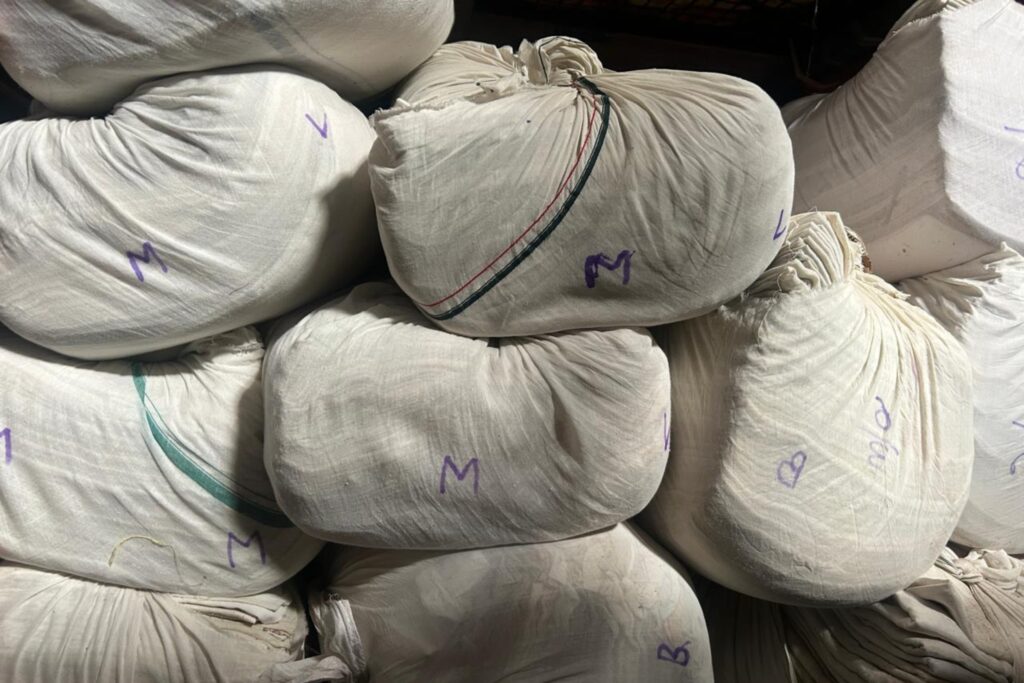
The difference is in sorting. A well-sorted batch has a consistent texture across every piece. Sizing is uniform. Lint is low. There is no odour, no stiffness, no rough patches that make certain pieces unusable.
If you are based in Delhi NCR and sourcing in bulk, finding a reputable old dhoti store in Delhi that documents its sorting and quality-check process is the sourcing decision that pays back most quickly. Ask directly about how they check texture, composition, and cut consistency before a batch ships. A supplier with real processes gives specific answers. One without them does not.
Frequently Asked Questions
Q1. Why do workshops keep choosing cotton rags over newer synthetic alternatives?
Cotton absorbs oil, grease, and fluid on contact and holds it inside the fabric. Synthetic materials push liquid sideways across a surface, which means more passes per task and more pieces used per shift. Pre-used cotton also arrives pre-softened, which makes it safe on finished surfaces from the first wipe. The combination of better absorption and lower surface risk is why cotton remains the standard in most Indian workshops.
Q2. Is pre-used dhoti cloth clean enough for service centre use?
Yes, when it has been properly processed by a reputable supplier. Pre-used cotton is sorted and checked for contamination, odour, and texture before supply. Its prior washing history actually makes it more suitable than new cotton in many applications because it is softer, more absorbent, and produces less lint during use.
Q3. What is the practical difference between white and colour cotton dhotis for workshop tasks?
White cotton dhoti is undyed, which makes contamination visible immediately on the surface of the cloth. Workers can see when a component is fully clean and when to switch to a fresh piece. This makes it the first choice for inspection and precision work. Colour cotton stays visually usable for longer on general cleaning tasks, which reduces how many pieces get discarded before they are actually finished.
Q4. How do cotton rags help reduce costs in a service centre over time?
Cotton absorbs more in fewer passes, so fewer pieces are used per task. Pre-softened cotton does not scratch surfaces, which reduces rework costs at inspection. Low-lint cotton protects filters and precision components from fibre contamination. Each of these is a saving that shows up in the monthly numbers once you start tracking actual cloth consumption and rework frequency rather than just the purchase price per kilogram.
Q5. What should I check before placing a bulk cotton rag order for my workshop?
Four things: texture (soft and consistent across the batch), smell (neutral, no chemical or storage odour), cut sizing (uniform dimensions throughout, not random offcuts), and composition (cotton-dominant for absorbency tasks, clearly stated by the supplier). A trustworthy supplier gives clear answers to all four. One who cannot explain their sorting process will likely deliver inconsistent batches.
Final Word
Cotton rags are not used in workshops because of tradition. They are there because the alternatives keep failing at the tasks that matter most.
Better absorption, lower lint, safer on surfaces, and more usable work per piece. Those are not minor advantages. They are the difference between a service centre that runs efficiently and one that keeps dealing with problems nobody can quite name.
Shiv Enterprises has been supplying quality-sorted cotton cleaning materials to India’s leading service centres, automotive plants, and engineering workshops since 1987. Consistent quality, fair pricing, and delivery that does not hold up your floor.