
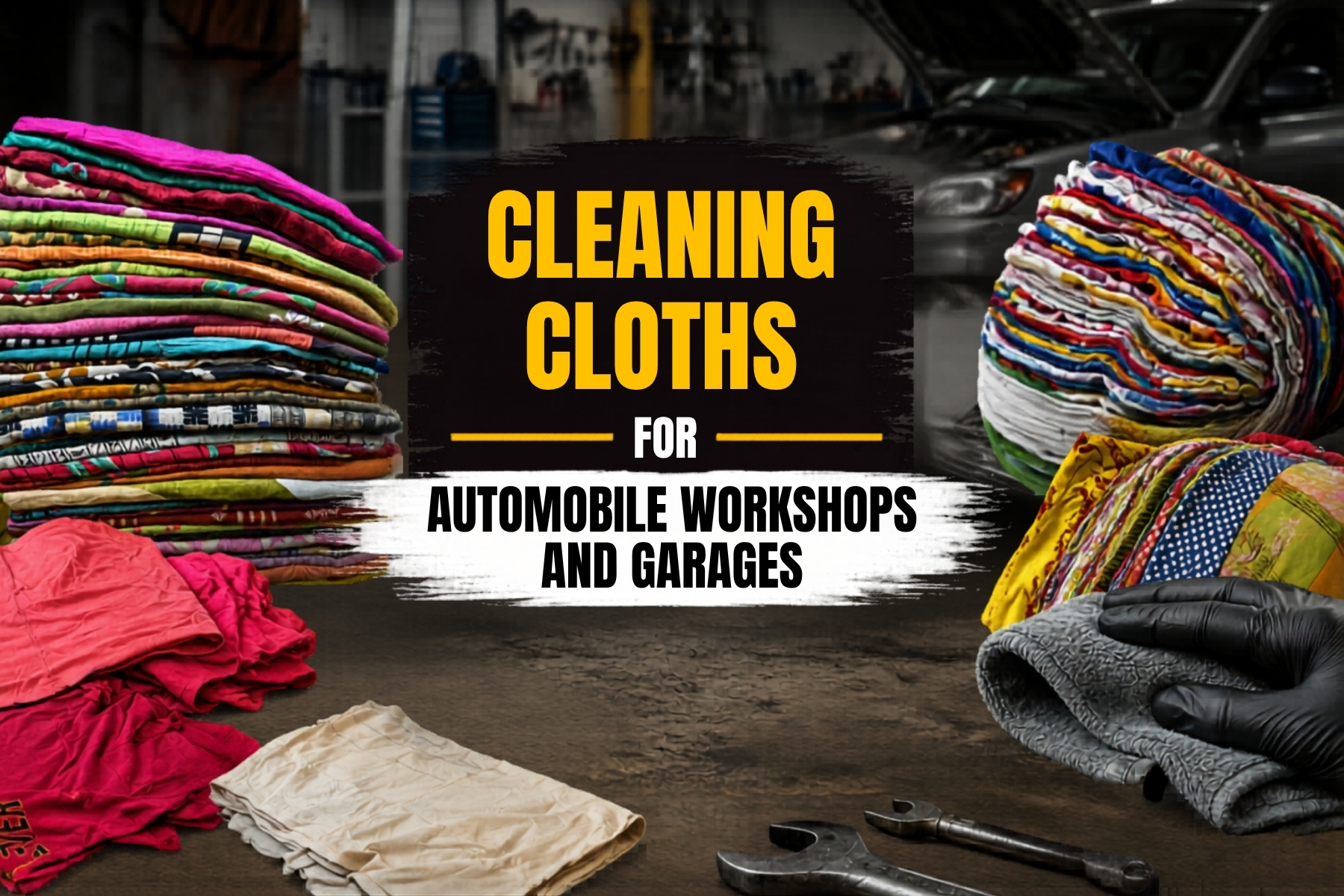
Every automobile workshop runs on speed and precision. Between every brake job, every engine flush, every panel prep, there is a cloth doing the quiet work.
Most workshop owners do not give that cloth a second thought. That is where costs quietly climb.
The wrong cloth needs four passes, whereas the right one needs only one. It scratches a freshly painted panel. It sheds lint into a precision assembly. The right cleaning cloth keeps technicians moving and machines running clean.
This guide covers which cleaning cloths actually work in automobile workshops and garages, and why.
Why the Right Cleaning Cloth Changes How Your Workshop Runs
Walk into a busy garage and watch what slows technicians down between jobs. It is rarely the tool. It is often the cloth.
A technician cleaning a calliper with the wrong rag wipes it three times, and the grease is still spreading. He reaches for another. The next job is waiting. That small delay, multiplied across a full shift, adds up to real time lost.
The type of cleaning cloth you stock directly affects three things:
- Bay turnaround time: Better absorbency means fewer passes per task.
- Surface quality: Soft, pre-washed cloth protects painted panels and machined components from micro-scratches.
- Monthly material cost: A cloth that performs in one pass lasts longer and gets used less per job.
What Makes a Good Cleaning Cloth for Garages
Not every cloth marketed as a workshop rag performs like one. Here is what separates the ones that work from the ones that waste your money.
Absorbency comes first: A cloth that pulls oil, grease, and coolant into the fabric in one or two passes is doing its job. One that spreads the liquid around the surface is not.
Surface safety is equally important: In automobile workshops, the same cloth might clean a raw metal bracket and a finished painted panel. It needs to be soft enough to handle both without causing damage.
Low lint output protects machine life: Cloths that shed fibres deposit them onto filters, seals, and precision assemblies. That contamination builds up quietly and causes stoppages that are expensive to trace and fix.
Batch consistency is the final test: A good sample means little. Reliable cleaning cloths perform the same way across every piece in every batch, not just the one you checked.

Best Types of Cleaning Cloths for Automobile Workshops
Purani Dhoti: The Original Workshop Standard
Ask any experienced mechanic in India what they reach for, and the answer rarely changes. Purani dhoti has been the backbone of workshop cleaning for decades, and the reason is straightforward: it works reliably, every shift.
Old dhoti fabric is woven from 100% natural cotton. Because it has already been through real-world use and repeated washing, the loose surface fibres have already shed. What arrives at your workshop is a stabilised cloth that cleans without leaving lint behind on components.
For automobile workshops, purani dhoti handles engine oil, brake fluid, hydraulic fluid, and coolant without a fight. One or two passes on a calliper or engine housing and the surface is clean. The fabric is also pre-softened from prior use, which means no break-in period and no risk of scratching sensitive surfaces from the very first wipe.
It is the right choice for component inspection, precision cleaning tasks, and any surface where quality matters.
Colour Old Dhoti: Practical for High-Volume Garage Use
Not every task in a garage needs a white cloth. For general-purpose, high-volume daily use, colour old dhoti is the practical choice.
The dyed surface does not show staining the way a white cloth does. That means each piece stays usable for longer before it needs to be replaced. Technicians are not discarding a cloth just because it looks dirty when there is still good life left in it.
Colour old dhoti works well for:
- Tool wipes after general use
- Machine and equipment exterior cleaning
- Floor and bay maintenance
- High-volume tasks where the visibility of the cloth is less critical
It delivers the same cotton absorbency and surface softness as a white old dhoti, with better practical longevity for everyday workshop tasks.
Cutting Cloth: For the Heaviest Workshop Jobs
Some cleaning jobs in a garage go beyond standard surface wiping. Heavy grease on machine exteriors, metal shavings on workshop floors, deep contamination on industrial equipment: these need something with more durability.
Cutting cloth, particularly the cotton-nylon mix variant, handles heavy-duty tasks where a standard cotton rag would saturate too quickly. It holds its structure under heavy use and retains enough absorbency to get the job done properly.
Use cutting cloth on rough surfaces and heavy contamination. Keep the softer cotton cloths for precision work.
Oil and Grease Cleaning Cloths: Why Cotton Wins Every Time
This is the real test for any cleaning cloth in an automobile workshop. Engine oil, gear grease, and hydraulic fluid are the most common contaminants on the floor, and they do not respond well to the wrong material.
Oil and grease cleaning cloths made from cotton outperform synthetic alternatives consistently. The reason comes down to how cotton fibre is built. Cotton is naturally hydrophilic: it draws liquids into the fabric and holds them there. Synthetic fibres work oppositely. They repel liquids and push them across the surface rather than absorbing them.
In practice, a technician using cotton absorbs the grease in one wipe. A technician using a synthetic rag redistributes it.
For oil and grease tasks specifically:
- A white old dhoti is the best choice for precision surfaces and inspection work.
- Colour old dhoti handles the general daily cleaning volume.
- Cutting cloth deals with heavy accumulations on floors and machine exteriors.
Matching the right cloth to the type of contamination removes wasted effort and speeds up every cleaning task on the floor.
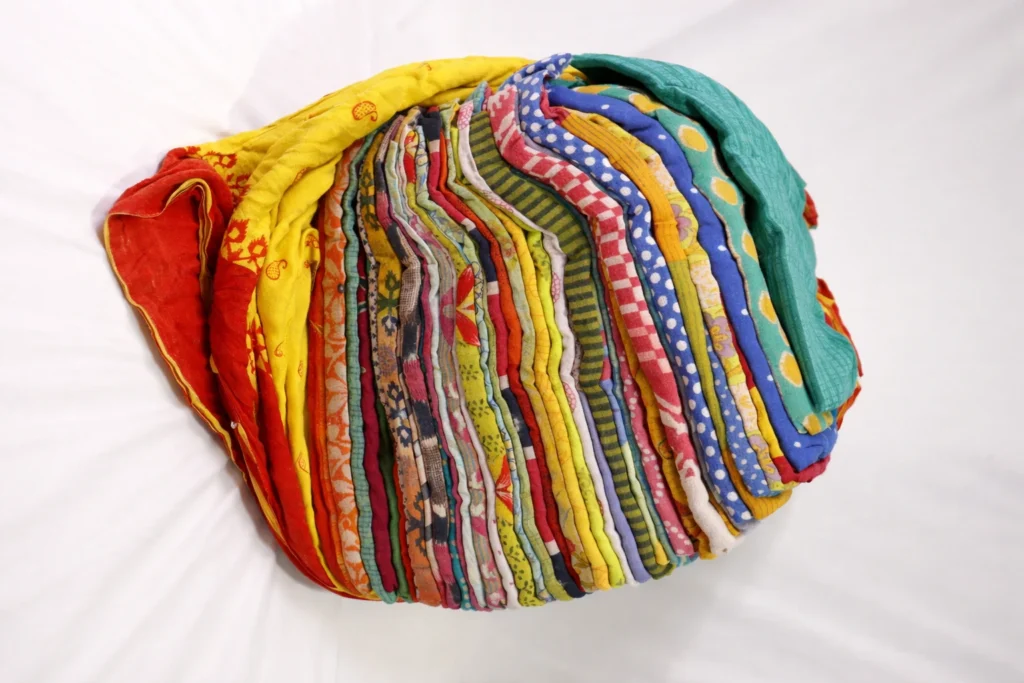
How to Find the Right Old Dhoti Suppliers for Your Workshop
The performance of any cleaning cloth depends heavily on how it was sourced, sorted, and processed before it reached your workshop. This is where many buyers make a costly mistake.
Old dhoti suppliers who invest in proper sorting deliver cleaning cloths that are:
- Consistent in size across every batch, with no random oversized or undersized pieces
- Pre-washed and free of chemical odour
- Sorted by type, so white dhoti batches stay white, and colour batches stay separate
- Checked for texture, with stiff or degraded pieces removed before supply
Before placing a bulk order, ask any supplier directly: how do you sort and quality-check your batches? A reliable supplier answers that question without hesitation.
Simple Tips to Get More from Every Cleaning Cloth
Choosing the right cloth is step one. Using it efficiently is step two.
A few small changes make a measurable difference:
- Assign by task: White old dhoti for precision and QC work. Colour the old dhoti for general cleaning. Cutting cloth for heavy-duty jobs.
- Do not single-use every piece: A lightly soiled cloth can move to a secondary role before it is discarded. Each piece has more usable life than most workshops tap into.
- Set a clear disposal threshold: Fraying edges and saturation past recovery are the usual signals. Technicians should know when a piece is done, not guess.
Frequently Asked Questions
1. Which cleaning cloth is best for automobile workshops?
Old cotton dhoti, specifically purani dhoti, is the most widely used and best-performing option in Indian automobile workshops. It absorbs oil and grease in one or two passes, is soft on surfaces, and has low lint output that protects precision components and filters.
2. What is the difference between a white and colour old dhoti for workshop use?
White old dhoti is best for tasks where contamination visibility matters: component inspection, quality checks, and paint shop use. Colour old dhoti suits for high-volume general cleaning, where longevity per piece is the priority.
3. Are cotton oil and grease cleaning cloths better than synthetic wipes?
Yes. Cotton fibres absorb oil and grease on contact by pulling liquids into the fabric. Synthetic fibres repel liquids and spread them across the surface. For oil and grease tasks in automobile workshops, cotton delivers faster and cleaner results with fewer wipe passes.
4. How do I identify a reliable old dhoti supplier before placing a bulk order?
Check four things: texture (soft on first touch), smell (neutral, no chemical odour), cut consistency (uniform sizing across the batch), and the supplier’s ability to explain their sorting and quality-check process clearly. A trustworthy supplier has documented answers ready.
5. Can a purani dhoti be reused across multiple tasks in a garage?
Yes. Start with precision or surface-sensitive tasks, then move it to general cleaning as it absorbs more contamination. Set a clear disposal threshold based on saturation and fabric condition, rather than discarding after a single use.
Final Word
The cleaning cloth you stock in your workshop is not a minor purchase decision. It affects how fast technicians work, how clean surfaces actually come out, and how much your workshop spends on materials every month.
Cotton old dhoti, whether white, colour, or cutting cloth, has earned its place in Indian automobile workshops over decades of real use on real floors. It absorbs properly, protects surfaces, and delivers consistent results when it comes from the right source.
Shiv Enterprises has been supplying quality-sorted old dhoti wipers, cutting cloth, and industrial hand gloves to India’s leading automotive, engineering, and manufacturing industries since 1987. If you want cleaning cloths that actually perform shift after shift, get in touch today.