

Most workshop managers do not realise how much cleaning material costs them until someone actually adds it up.
A few hundred rupees here. A few hundred there. By the end of the month, the number is bigger than it should be, and the floor still does not look right.
The problem is rarely how much you are spending. It is what you are spending it on.
The Real Reason Workshop Costs Keep Rising
Most workshops default to whatever cleaning material is nearby or cheapest at the time of order. That decision feels economical. It rarely is.
Cheap synthetic rags need more passes to clean the same surface. Disposable wipes run out faster. Low-quality materials leave lint behind, clog filters, and create rework. Each of these adds a hidden cost that never shows on the purchase invoice but shows up everywhere else.
The material you choose affects more than the price per piece. It affects how long each task takes, how often your team replaces clothes, and how much rework piles up by the end of the shift.
What Most Buyers Get Wrong About Cleaning Supplies
When procurement managers evaluate cleaning supplies, the focus usually lands on price per kilogram or price per bundle. That is an incomplete calculation.
The right question is: how much work does one piece of cleaning material actually do?
A cloth that cleans in two passes is not the same as one that needs five. A material that holds up through a full shift is not the same as one that shreds by noon. When you measure cost against actual cleaning performance, the numbers look very different.
Smarter Choices That Reduce Cost Without Reducing Quality
Switch to Cotton-Based Material
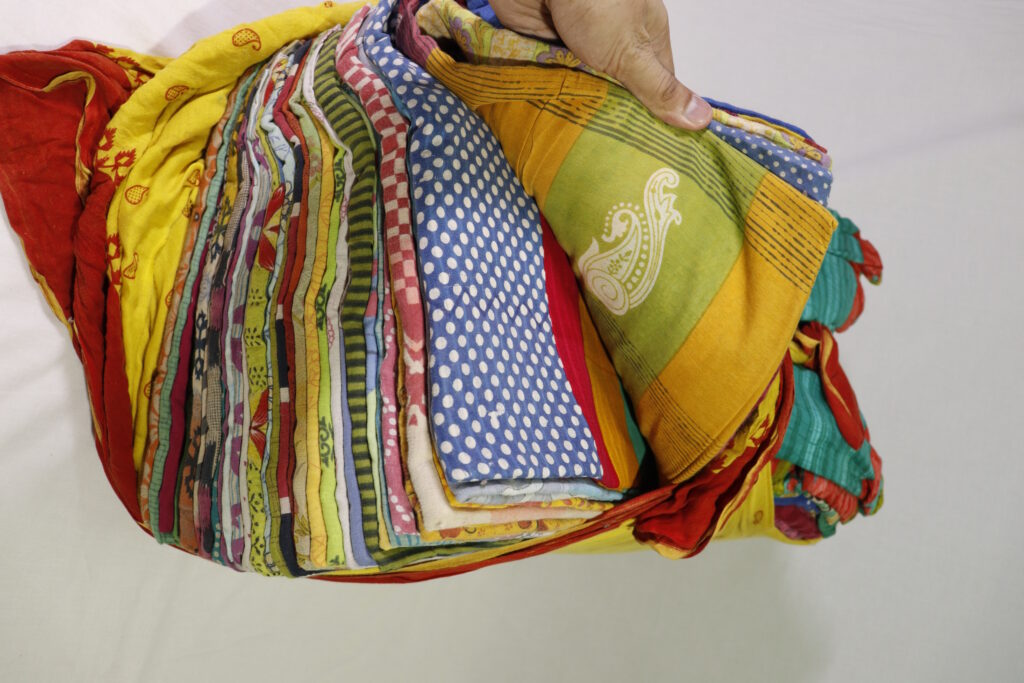
Cotton old dhoti absorbs oil, grease, and coolant in one or two passes. Synthetic alternatives spread the same liquid around instead of capturing it. Over the course of a shift, cotton covers more work with fewer pieces.
For workshops handling engine fluids, lubricants, and machined components, this is not a small advantage. It is a daily, measurable saving.
Match the Variant to the Task
Not every cleaning job needs the same material. Using the right variant cuts waste significantly.
- White old dhoti for precision tasks, quality checks, and painted surfaces
- Colour old dhoti for general cleaning, tool wipes, and floor maintenance
- Cutting cloth for heavy-duty machine surfaces and grease-heavy jobs
Overusing premium variants on basic tasks is a budget drain. Matching the material to the job is one of the simplest cost controls available.
Buy in Bulk From a Reliable Supplier
Bulk orders lower your cost per piece, but the supplier matters as much as the quantity.
Workshops sourcing old dhoti in Delhi and the surrounding NCR region should prioritise suppliers who sort consistently, cut to uniform sizes, and can explain their quality-check process clearly. Inconsistent batches create floor waste, which cancels out any bulk saving before it reaches your operations.
The Right Supplier Changes the Equation
An old dhoti for workshop cleaning is only cost-effective when the material is properly sorted and consistently sized. A poorly processed batch wastes as much material as a low-quality synthetic rag would.
Before placing a bulk order, check three things: Is the texture soft on first touch? Is the cut consistent across the full batch? Can the supplier clearly state whether the batch is pure cotton or a mix? A reliable supplier answers all of these directly, without hesitation.
Cost control in cleaning is not about spending less. It is about spending on material that actually performs.
Shiv Enterprises has been supplying quality-sorted old dhotis, cutting cloth, and industrial hand gloves across Delhi NCR and beyond since 1987. If you are reviewing your cleaning supply costs, we are ready to help you get it right.
Frequently Asked Questions
1. Why are my cleaning supply costs higher than expected?
Low-performing materials require more pieces per task, quietly increasing consumption and rework costs every shift.
2. Is the old cotton dhoti actually cheaper than synthetic rags?
Yes, when measured by cleaning performance per piece rather than purchase price alone.
3. How do I find a reliable old dhoti supplier in Delhi?
Look for suppliers who sort consistently, cut to uniform sizes, and can clearly explain their quality-check process.
4. Which old dhoti variant works best for engine and mechanical cleaning?
White or colour cotton old dhoti works best due to its natural absorbency and pre-softened texture.
5. Does bulk buying always reduce cleaning supply costs?
Only if the supplier maintains consistent quality across the full order, otherwise floor waste cancels out the saving.