
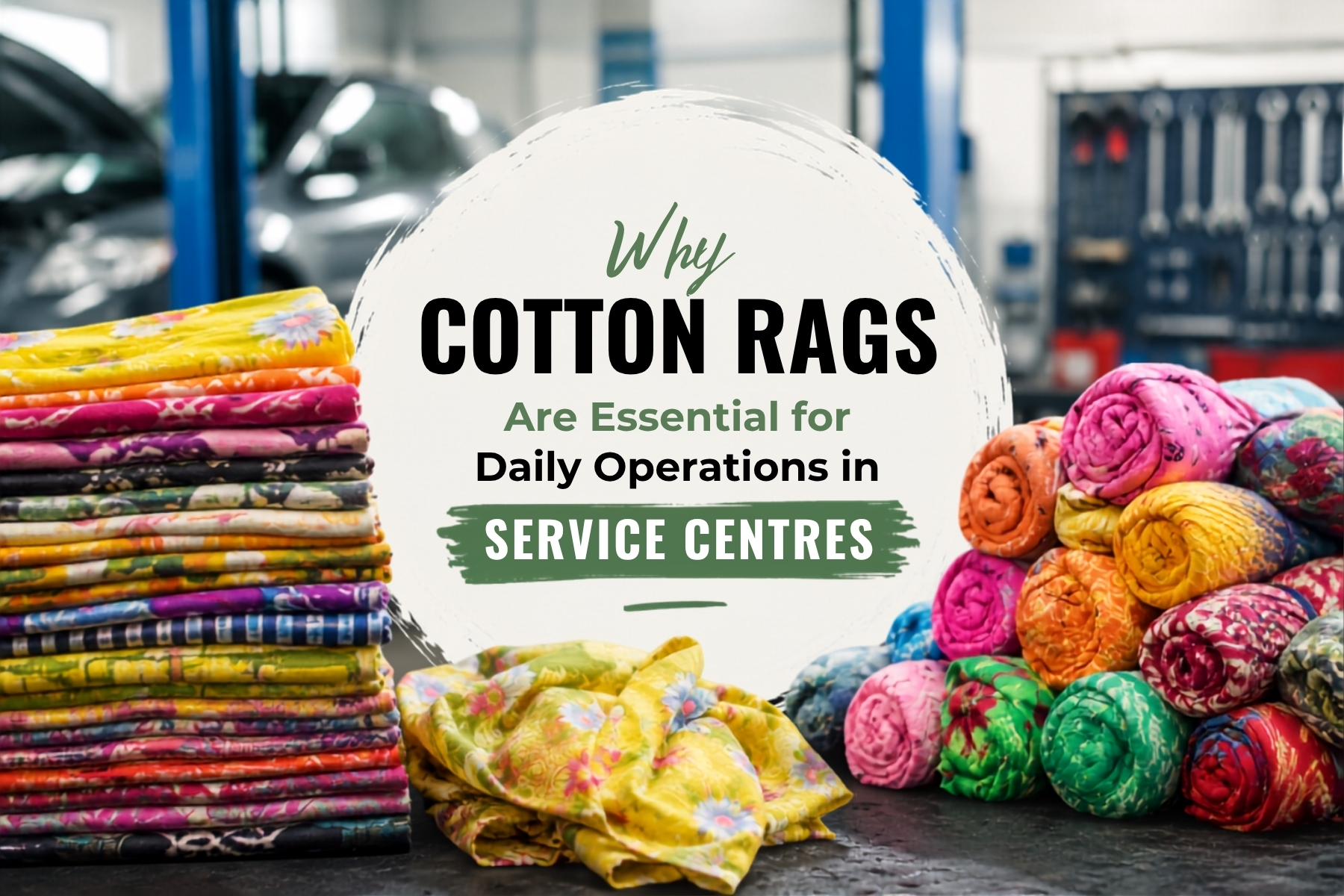
Service centres run on speed. Every bay needs to turn over quickly, every surface needs to be cleaned properly, and every technician needs materials that actually work.
The cleaning cloth in that technician’s hand matters more than most managers realise.
What Service Centres Are Dealing With Every Shift
Oil changes, brake fluid flushes, coolant top-ups, and engine degreasing. These are not light-duty tasks. Every shift produces a steady flow of fluids, greases, and contaminants that need to be cleared off tools, surfaces, and components before the next vehicle rolls in.
The cleaning material your team uses directly affects:
- How fast each task gets completed
- Whether surfaces stay scratch-free during the process
- How much cloth gets consumed per shift
- Whether fluid contamination ends up where it should not
This is where cotton rags for service centres make a measurable difference on the floor.
Why Cotton Simply Outperforms the Alternatives
The answer is not complicated. Cotton is hydrophilic. It pulls oil, grease, and moisture into the fabric and holds it there. Synthetic cloth does the opposite. It spreads liquid across the surface rather than absorbing it.
In a service centre where technicians handle fluids throughout every shift, that single property changes everything.
A quality piece of old dhoti cleans most surfaces in one or two passes. Synthetic alternatives require four or five to achieve the same result. Multiply that across your full team on an eight-hour shift, and the daily time loss becomes very real, very quickly.
The Hidden Cost of Using the Wrong Cloth
Here is something many service centre owners miss entirely. The wrong cleaning cloth does not just slow workers down. It creates problems that show up later and cost more to fix.
Stiff synthetic cloth scratches painted panels and polished surfaces. That damage appears during quality checks or in the paint bay, not at the point of cleaning. Rework is always more expensive than better materials.
Synthetic fibres shed microfibres during use. These invisible particles settle into filters, seals, and precision assemblies. Over time, this causes blockages, component failures, and unplanned stoppages.
Getting your cotton rags right is not a minor supply decision. It directly affects your rework rate and operational costs.
Matching the Right Variant to Each Task
Not all cotton cleaning materials perform identically. Choosing the right type for the right job reduces waste and stretches your monthly supply further.
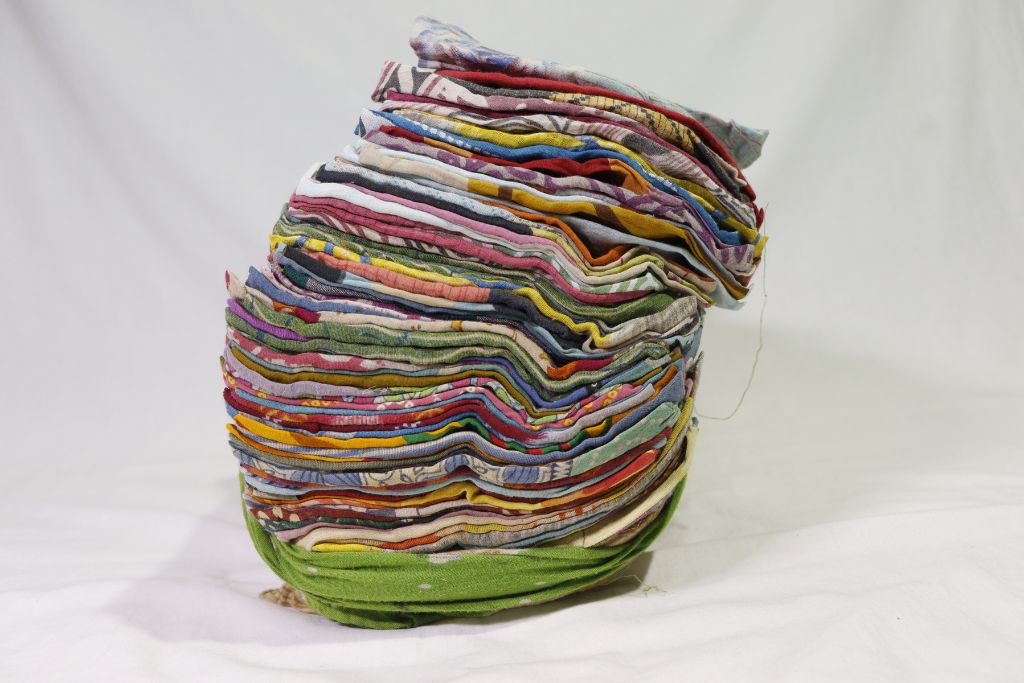
White cotton old dhoti works best for precision tasks: component inspection, final panel wipes, and quality control checks. The undyed surface shows contamination, so technicians know exactly when to switch to a fresh piece.
Colour old dhoti is better suited for high-volume daily cleaning: tool wipes, floor maintenance, and general surface work. The dyed fabric remains visually usable longer, which reduces how often pieces are swapped out.
Service centres across Delhi-NCR, including operations sourcing old dhoti in Gurgaon, have relied on quality-sorted cotton variants for exactly this reason. Consistent supply delivers consistent performance, shift after shift.
Frequently Asked Questions
1. Why are cotton rags better than synthetic rags for service centres?
Cotton absorbs oil, grease, and fluids in one or two passes, while synthetic cloth simply spreads them around.
2. What is the difference between a white and a colour old dhoti?
White old dhoti is best for precision and quality control work; colour old dhoti is better for high-volume daily cleaning tasks.
3. Can cotton rags cause lint problems on engine components?
Well-sorted cotton old dhoti sheds very few fibres, as loose fibres are naturally removed through prior washing cycles.
4. How many cotton rags does a service centre bay typically need per shift?
A standard bay handling oil changes and fluid work usually goes through eight to twelve pieces per shift.
5. Where can service centres in Delhi NCR and Gurgaon source cotton rags in bulk?
Shiv Enterprises supplies quality-sorted old dhotis and cutting cloth across Delhi NCR, including Gurgaon and surrounding areas.
Final Word
A service centre that runs well pays attention to every part of its operation. Cleaning materials are not a footnote in that picture. The right cotton rags reduce cleaning time, protect surfaces, control contamination, and bring down cost per task across every working day.
Shiv Enterprises has been supplying quality-sorted old dhotis, cutting cloth, and industrial hand gloves to India’s leading service centres and workshops since 1987. If your operations need a reliable, consistent supply, we are ready to help.