

Walk into most workshops in India, automobile garages, manufacturing floors, engineering units, and you’ll find the same scene. Workers grabbing whatever cloth is nearby. A torn piece of old fabric. Sometimes a synthetic rag that smears more than it wipes. Nobody questions it. It’s just a cleaning cloth.
But that small daily decision is quietly costing your workshop more than you think.
The Hidden Cost Nobody Talks About
When workshop owners think about cutting costs, they look at machinery, manpower, and raw materials. Cleaning cloth? It barely makes the list.
Here’s the reality: poor-quality cleaning cloth doesn’t just clean badly. It creates problems that cost money downstream.
A substandard rag leaves lint on a machine part. That lint gets into the assembly. The part malfunctions. You spend hours diagnosing the issue. The cost of that one “cheap” rag? Far more than the cloth itself.
This isn’t rare. It happens every day across workshops that haven’t standardised their cleaning material.
What Poor Cleaning Cloth Actually Costs You
Let’s make this concrete. Here’s where the money leaks out:
- Repeated wiping: Low-absorbency cloth means workers wipe the same surface 3 to 4 times to get the job done. That’s lost time on every shift.
- Surface damage: Stiff or synthetic cloth scratches painted panels, polished surfaces, and precision parts. Fixing that damage is expensive.
- Lint contamination: Cloth that sheds fibres clogs filters, fouls machine components, and creates quality defects in finished products.
- Faster disposal: Poorly sorted cloth falls apart quickly. You’re buying more often, which means your per-month spend goes up even if the per-piece price looks low.
- Worker complaints: Nobody talks about this, but workers using bad cleaning cloth slow down. Frustration at the workstation is a real productivity drain.
All of this adds up. And the fix is simpler than most workshop managers realise.
The Cleaning Material Indian Industries Have Relied On for Decades
There’s a reason old dhoti has been the go-to cleaning material for Indian industries since well before synthetic wipes arrived.
It’s cotton. It’s pre-washed. It’s soft. And it works.
Cotton fibres naturally absorb oil, grease, coolant, and water without leaving residue. The fabric is gentle enough for finished surfaces but tough enough for daily rough use on the shop floor. Industries supplying to automotive giants like Maruti, Hyundai, and Kia have been using it for years because it doesn’t fail them.
Purani dhoti, as it’s commonly called in procurement circles, is essentially premium industrial wiping cloth in disguise. What was once worn as everyday clothing becomes, after proper sorting and processing, one of the most reliable cleaning materials available.
White vs Colour: Picking the Right Cloth for the Right Job
Not all old dhoti is the same, and using the wrong type for the wrong job is its own kind of waste.
The White Variant: When Cleanliness Visibility Matters
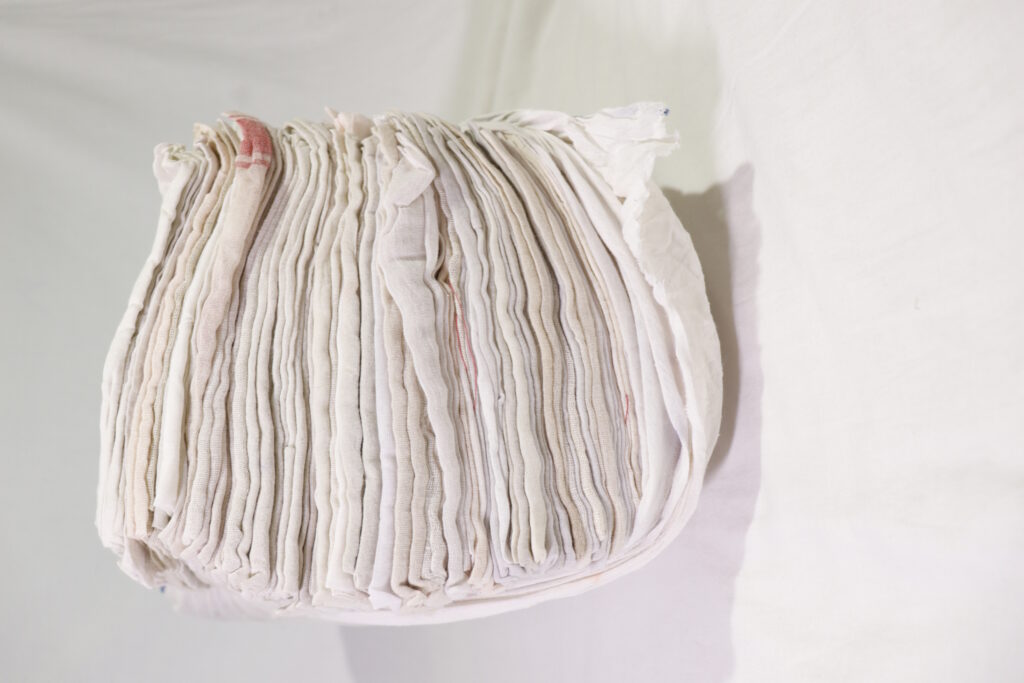
Cotton white old dhoti is the cleaner, more uniform option. Because it’s undyed, it’s easier to inspect after use. You can clearly see how much oil, grease, or grime has been absorbed. This makes it ideal for:
- Precision cleaning of machine components
- Checking surface cleanliness before assembly
- Tasks where contamination visibility matters
- Paint shops and finishing areas
The white surface makes quality control simpler. Workers can tell at a glance when a cloth has reached the end of its usable life.
The Colour Variant: Built for Heavy Daily Use
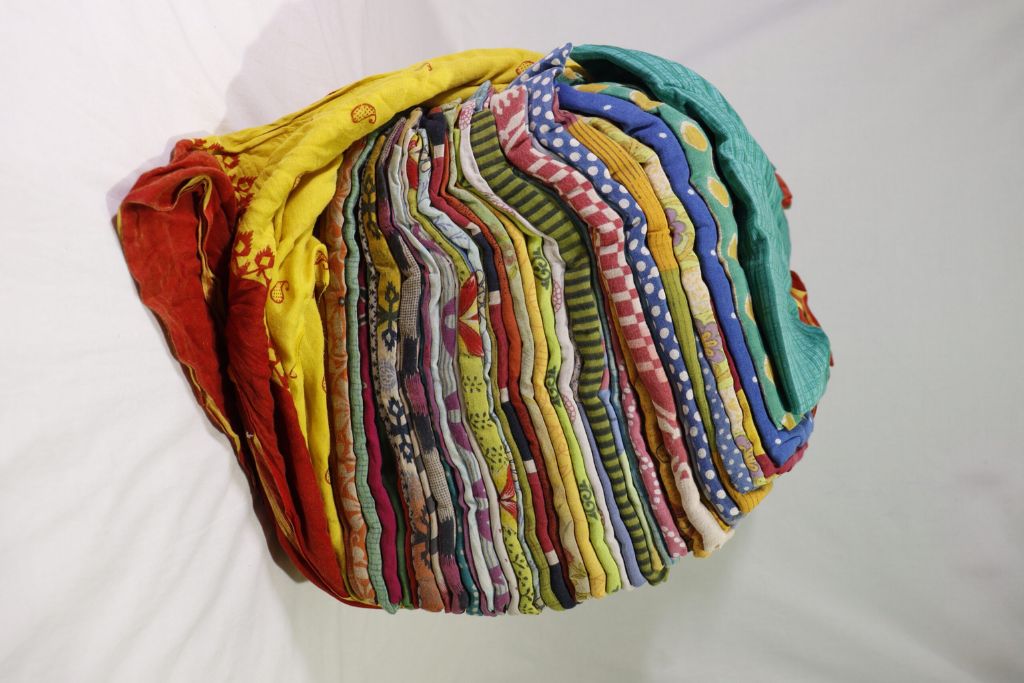
Colour old dhoti is dyed fabric, typically more varied in appearance, but equally strong in performance. The coloured surface has one practical advantage that white cloth doesn’t: stains and grease marks blend in, meaning workers continue using a piece for longer before discarding it.
For general-purpose wiping like cleaning tools, wiping down work surfaces, and dealing with heavy grease, colour dhoti is often the smarter buy. You get more use per piece, which directly reduces your monthly material spend.
Why the Printed Variant Deserves a Spot in Your Cleaning Kit
Printed cotton old dhoti sits in the colour category but has its own characteristics worth knowing. This is recycled dhoti fabric that carries original printed patterns from its earlier use.
Because it’s pre-worn and pre-washed through real use cycles, it arrives notably softer than freshly processed cloth. For tasks involving:
- Wiping car body panels before painting
- Cleaning optical components or polished metal
- Light maintenance wipes where surface safety matters
Printed old dhoti for cleaning is often the better call. The softness protects surfaces, and the patterned surface hides light staining, extending each cloth’s useful life.
Many facilities that have tried printed cotton old dhoti report fewer complaints about surface scratching compared to synthetic alternatives.
The Right Way to Buy: What to Actually Check
Buying old dhoti for cleaning in bulk isn’t complicated, but a few checks will save you from bad batches:
Texture first. Pick up a piece. It should feel soft and pliable immediately. Stiffness means it hasn’t been processed or washed properly. That cloth will either scratch surfaces or fall apart quickly.
Check for odour. A faint neutral smell is fine. A strong, sour, or chemical odour is a sign of improper washing or poor storage. Don’t accept it.
Look at cut consistency. Uniform sizes matter for workstation efficiency. If pieces are cut unevenly, distribution and use become messy.
Ask about composition. For wet and oil-heavy tasks, you want cotton-dominant cloth. Avoid batches with high synthetic content as they won’t absorb the way you need them to.
Evaluate the supplier’s sorting process. A supplier with a systematic sorting and quality-check process will give you consistent batches. One without it will give you unpredictable results, and that unpredictability costs you.
What Changes When You Get This Right
Workshops that standardise on quality old dhoti, matching the right type to the right task, typically see:
- Fewer re-wipes per job, saving measurable time across shifts
- Less surface damage from scratching or lint
- Lower monthly spend because each cloth lasts longer
- Smoother workflows because workers aren’t fighting bad tools
It’s not a dramatic transformation. It’s a quiet upgrade that compounds over months. And in a business where margins are tight, that compounding matters.
Frequently Asked Questions
1. What is the difference between cotton white old dhoti and colour old dhoti?
White old dhoti is undyed and gives you better stain visibility, making it useful for precision and quality-control tasks. Colour old dhoti has dyed fabric that hides stains, making it last longer per piece in general industrial use.
2. Is printed cotton old dhoti safe for polished or painted surfaces?
Yes. Because it’s pre-washed and inherently soft from prior use, printed cotton old dhoti is one of the gentler options available. It’s suitable for car panels, polished metal, and similar sensitive surfaces.
3. Why is old dhoti preferred over synthetic industrial wipes?
Cotton-based old dhoti absorbs liquids, oils, and grease far more effectively than synthetic fabrics. Synthetic cloth tends to repel rather than absorb, which makes it useful for dry wiping but not for workshop conditions involving lubricants and engine fluids.
4. How do I know if a bulk batch of old dhoti is good quality?
Check texture (should be soft), smell (should be neutral), cut uniformity (consistent sizing), and composition (cotton-dominant). A supplier with a documented sorting and washing process is a reliable indicator of consistent quality.
5. Can I use colour old dhoti and cotton white old dhoti together in the same workshop?
Absolutely, and many workshops do exactly this. White dhoti works well for precision and inspection tasks, while colour dhoti handles heavy-duty general cleaning. Using both where appropriate maximises cost efficiency and performance.
Watch more on our YouTube channel: https://youtu.be/et8VtV2LTUQ?si=fxo7vT11vwpPyKGM
Final Word
Most workshops aren’t losing money on big decisions. They’re losing it on small, recurring ones, like the cleaning cloth sitting at every workstation.
Choosing the right old dhoti, whether that’s cotton white old dhoti for precision work, colour old dhoti for daily floor use, or printed cotton old dhoti for delicate surface cleaning, is a low-effort decision with a real return.
If you’re looking to standardise your workshop’s cleaning material with consistent quality and bulk supply across Delhi NCR, Shiv Enterprises has been supplying trusted old dhoti and cutting cloth to India’s leading industries since 1987. Reach out to discuss your requirements.