
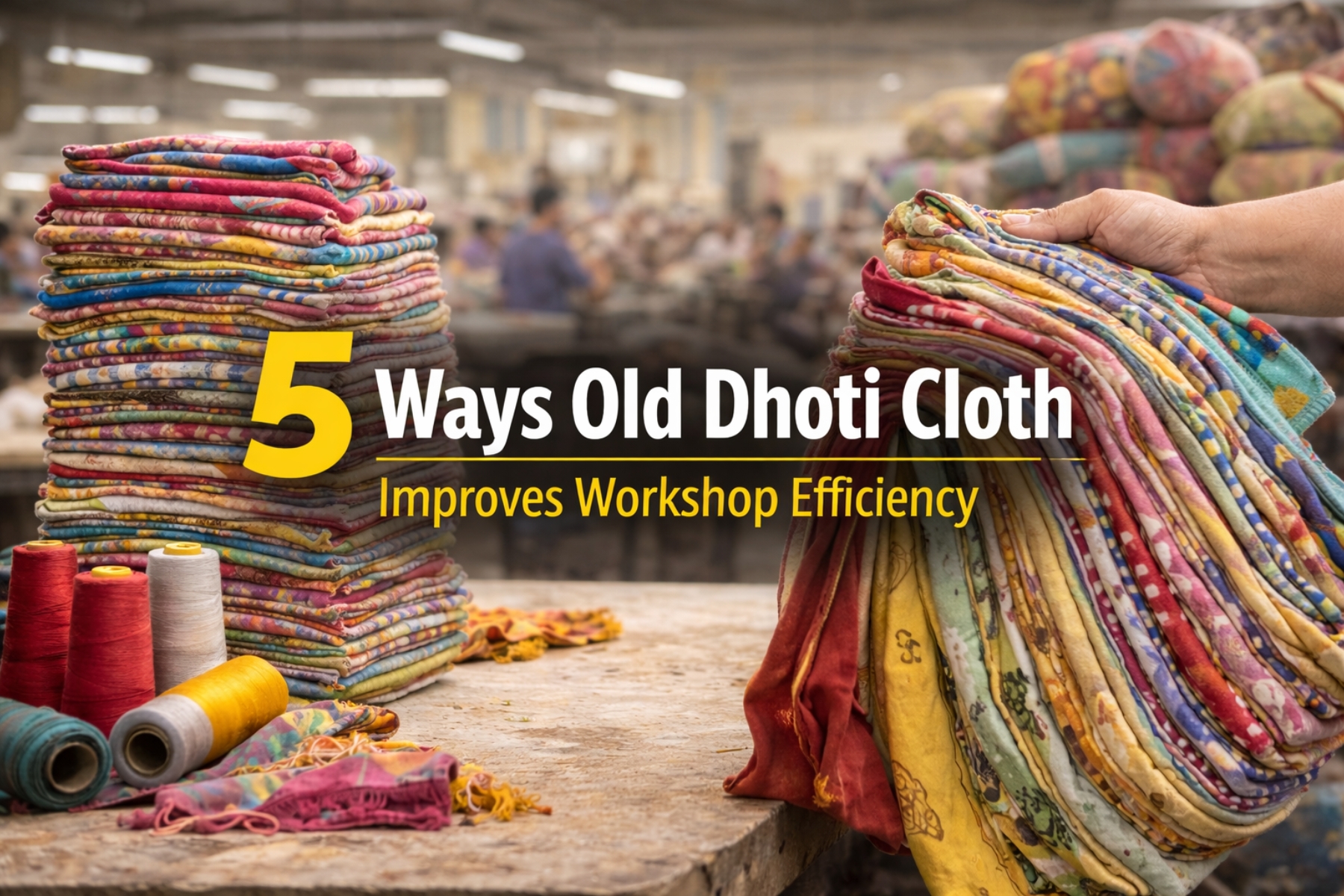
Walk into any automobile workshop, engineering unit, or manufacturing plant in India. One thing stays constant. Workers are wiping, cleaning, and maintaining machines all day. It never stops.
What they use to do that job matters more than most managers think. The wrong cleaning cloth means repeated wipes, surface damage, lint contamination, and frustrated workers. That adds up, every single shift.
This is exactly why old dhoti has been the go-to cleaning material for Indian industries for decades. There are real, practical reasons why procurement teams keep coming back to it.
Here are specific ways this recycled cotton cloth improves workshop efficiency every day, backed by how it actually performs on the floor.
1. It Absorbs Fast, Which Means Workers Wipe Less
Time lost to repeated wiping is one of the most invisible drains in a workshop. A worker shouldn’t need three or four passes to clean one machine part. But that’s exactly what happens when the cloth doesn’t absorb properly.
That is where old dhoti for industrial cleaning stands apart. It is 100% cotton, which naturally pulls in oil, grease, coolant, and water rather than pushing it around. One clean wipe does the job that a synthetic cloth takes four passes to finish.
Across dozens of workers and hundreds of wipes a day, that efficiency compounds fast. Less time wiping means more time on actual work.
Not all cotton rags perform the same way. For oil and grease-heavy tasks, undyed white variants work best. They maintain full absorbency without any chemical interference from dye processing.
2. Soft Fabric Protects Surfaces and Reduces Rework Costs
Surface scratches on machine components, painted panels, or finished parts don’t just look bad. They create rework, delays, and in some cases, rejected parts. A stiff or synthetic cloth is often the silent culprit.
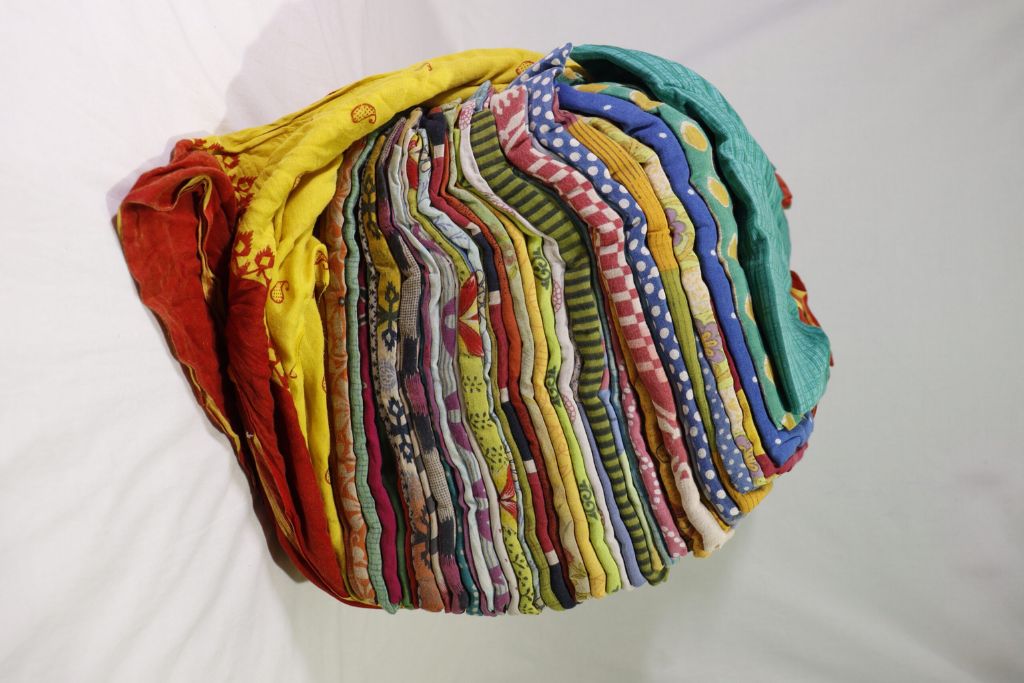
Purani dhoti, recycled after real-world use, arrives pre-washed and naturally softened. There is no breaking-in period. Pick it up and it is already gentle on surfaces.
For workshops handling car body panels before painting, polished metals, or precision-engineered parts, this matters enormously. A softer wipe reduces the chance of micro-scratches that cause quality control failures downstream.
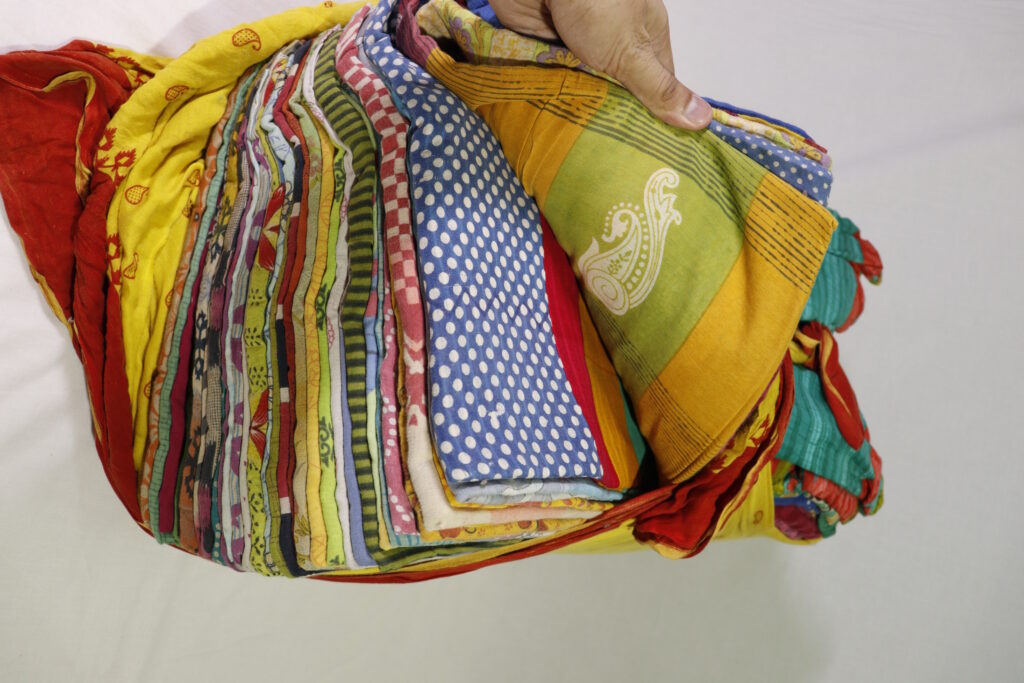
The printed cotton variant carries original patterns from earlier use and is especially soft because of its extended wash history. Many automotive facilities use it specifically for final panel wipes before painting.
3. Low Lint Keeps Machines Running Without Interruption
Lint in the wrong place is more than an inconvenience. Fibres that shed during cleaning can get into moving parts, clog filters, and cause contamination in precision assemblies. When that happens, machines stop. Diagnostics take time. Production stalls.
Well-sorted cotton rags shed far fewer fibres than cheap, poorly processed alternatives. The difference is in the sorting. Batches that go through a rigorous quality check produce consistent, low-lint cloth that workers can rely on.
At Shiv Enterprises, every batch is carefully sorted and checked for strength, absorbency, and consistency before it ships. That is not a marketing claim. It is the reason industries supplying to BMW, Hyundai, Maruti, and Kia have trusted them since 1987.
The bottom line: Cleaner cloth means cleaner machines. Cleaner machines mean fewer breakdowns. Fewer breakdowns mean better output.
4. The Right Cloth for the Right Task, Without Spending More
One of the underrated advantages here is the variety available, and how well each type maps to a specific workshop task. You don’t need to pay a premium for a specialised industrial product when the right cleaning cloth handles the job better.
White Variant: For Precision and Inspection Work
The undyed surface makes contamination immediately visible. Workers can tell at a glance when a piece has absorbed enough grime. This makes it ideal for quality-control tasks, component inspection, and paint shop use.
Colour Variant: For High-Volume Daily Cleaning
The dyed surface hides staining, so each piece stays in use longer before disposal. For general floor cleaning, tool wipes, and surface maintenance, it delivers more usable life per piece. Your monthly spend on cleaning material drops without any loss in performance.
Cutting Cloth: For Heavy-Duty and Mixed-Material Cleaning
Cutting cloth sourced from color sports t-shirt material (nylon or cotton mix) handles tough cleaning jobs where softer fabric would wear too quickly. Think heavy machinery, workshop floors with metal shavings, or mixed-surface wiping. The composition makes it durable without sacrificing absorbency.
Using the right cloth for the right task isn’t about spending more. It’s about not wasting what you already spend.
5. Consistent Bulk Supply Removes a Procurement Headache
Workshop managers deal with enough variables every day: machine maintenance, workforce attendance, production targets, deadlines. Cleaning material shouldn’t be one of the things they have to chase.
Inconsistent supply creates real problems. A batch that’s poorly sorted arrives stiff, smelly, or full of synthetic pieces that don’t absorb. Workers complain. Quality dips. Supervisors spend time managing a problem that should have been solved at the source. Standardising on quality old dhoti for industrial cleaning removes this entirely.
This is where choosing reliable old dhoti suppliers makes a tangible difference. A supplier with a documented sorting and quality process delivers predictable batches. You know what you’re getting. Workers know what to expect. Procurement stops being a recurring problem.
For workshops in Delhi NCR, bulk supply with customised cutting sizes and timely delivery is part of the package, not an exception.
Quick Reference: Which Variant Works Best Where?
- White variant: Precision cleaning, component inspection, paint shops
- Colour variant: Daily tool wipes, floor cleaning, general maintenance
- Printed cotton variant: Panel wipes before painting, polished metal surfaces
- Color sports t-shirt cutting cloth: Heavy-duty floor and machine cleaning
Frequently Asked Questions
1. Why do workshops prefer old dhoti over synthetic cleaning cloth?
Cotton-based recycled cloth absorbs oil, grease, and coolant far more effectively than synthetic alternatives. Synthetic cloth tends to repel liquids rather than absorb them, making it mostly useful for dry dusting. For workshops dealing with lubricants and engine fluids, natural cotton wins every time.
2. Is purani dhoti hygienic enough for industrial use?
Yes, when properly sorted and processed. The recycled fabric is washed and checked before supply. Its pre-used nature actually works in your favour: it arrives softer and more absorbent than fresh cloth that hasn’t been broken in.
3. Can I customise cutting sizes for my workshop?
Yes. Reputable suppliers offer customised cutting sizes to match specific workstation needs. Consistent sizing also improves how material is distributed and tracked across shifts.
4. What should I check when evaluating old dhoti suppliers?
Check four things: texture (should feel soft immediately), smell (neutral, no harsh odour), cut uniformity (consistent sizing), and composition (cotton-dominant for absorbency tasks). Ask about their sorting process. A supplier without a documented one will give you inconsistent batches.
Watch more on our YouTube channel: https://youtu.be/et8VtV2LTUQ?si=fxo7vT11vwpPyKGM
Final Word
Workshop efficiency rarely comes from one big decision. It comes from dozens of small ones, repeated every day, on every shift. Cleaning material is one of those small decisions that adds up faster than most managers realise.
Choosing the right cleaning cloth and matching it to the right task is a low-effort change with a measurable return. Less rework. Fewer machine stoppages. Lower monthly spend. Smoother workflows.
If you’re looking to standardise your workshop’s cleaning supply with consistent quality and bulk delivery across Delhi NCR, Shiv Enterprises has been a trusted supplier to India’s leading industries since 1987. Get in touch to discuss your requirements.