
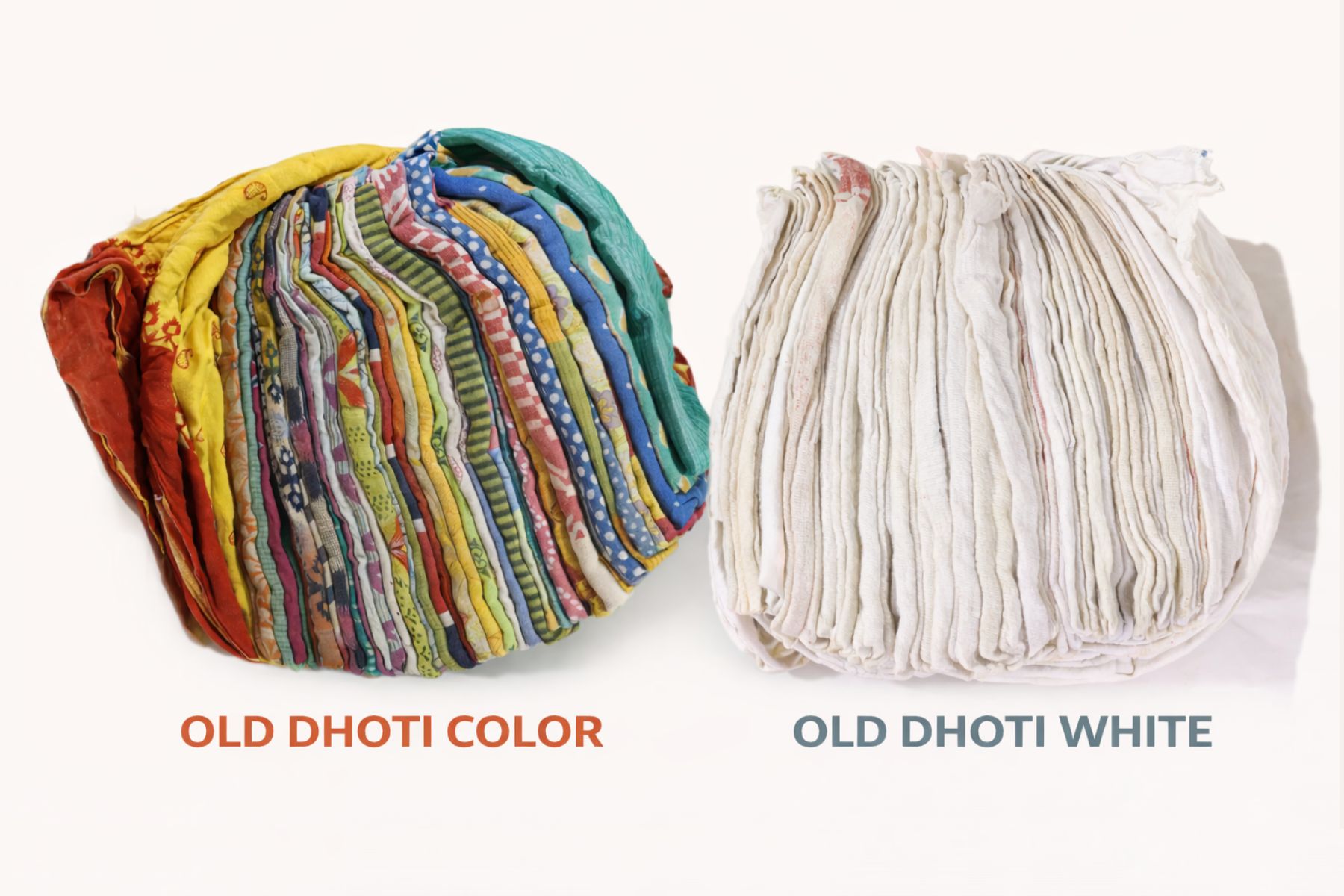
If you’ve ever purchased recycled cloth for cleaning or industrial use, you already know that not all wiping fabrics perform the same. Many buyers notice two common options in the market – white and colored varieties – but aren’t always sure which one they should choose. While the difference might look purely visual, in practice, it affects usability, lifespan, and cost.
This guide explains the difference in simple, practical terms so you can pick the right cloth based on real use, not assumptions.
Why Recycled Dhoti Cloth Is Widely Used
Across workshops, factories, garages, and maintenance units, recycled cotton cloth is a go-to material. It’s soft, absorbent, reusable, and affordable. Instead of discarding textile fabric after its original use, it gets repurposed into wiping cloth, which makes it both economical and environmentally responsible.
Most businesses prefer this fabric because it absorbs liquids quickly, doesn’t scratch surfaces, and holds up well during repeated use. That combination makes it reliable for both light and heavy cleaning jobs.
Old Dhoti White vs Colored: Practical Difference
At a glance, the only visible difference is color. But people who actually use these cloths daily know that performance can vary depending on how the fabric was sorted and processed.
The Old Dhoti cloth used in cleaning and wiping is known for its soft cotton texture and absorbency, yet white and colored types tend to suit different kinds of work.
Processing and Sorting Quality
White cloth is usually sorted more carefully during recycling. Because stains are easy to see, suppliers tend to wash and separate it more thoroughly. That’s why it often feels more uniform in texture.
Many technicians prefer cotton white old dhoti cloth for wiping glass, cleaning smooth surfaces, or polishing equipment since it reduces the chance of dye marks or residue.
Real-World Performance Difference
In terms of absorbency, both types perform well. Cotton naturally soaks up liquids, oils, and grease. The difference usually comes down to consistency. White cloth batches often feel similar piece to piece, while colored cloth can vary slightly in thickness or softness.
In practical settings, this matters more than people think. When someone is wiping machinery or tools all day, consistent fabric texture helps maintain steady pressure and better cleaning results.
When Colored Cloth Is the Better Choice
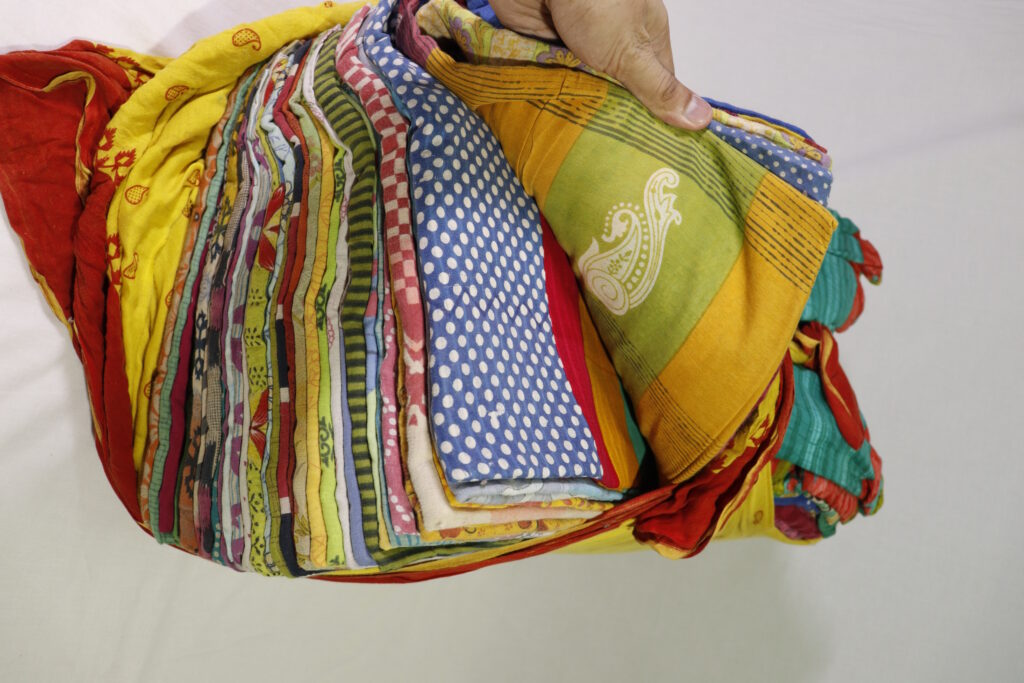
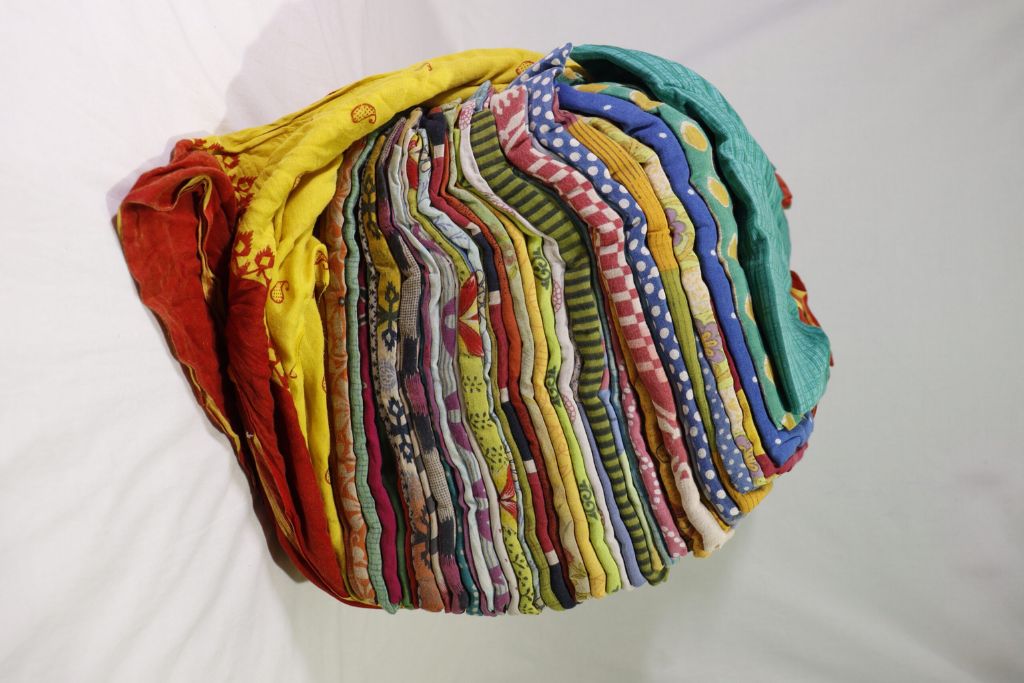
A colour old dhoti is commonly used where cleaning is rough, messy, or frequent. For example:
- Machine maintenance
- Tool wiping
- Oil spill cleaning
- Workshop floor cleaning
Since stains aren’t visible, workers can keep using the same piece longer. That makes it a practical and economical option for heavy-duty environments.
Cost Comparison
Colored cloth usually costs less because it doesn’t require the same level of sorting as white fabric. White cloth may be slightly higher in price due to extra cleaning and grading.
For businesses that go through large quantities daily, this price difference can affect overall expenses. Experienced buyers often keep both types available – colored for routine cleaning and white for finishing or detailed work.
The Old Dhoti category overall remains one of the most budget-friendly wiping solutions for industries that need bulk cloth regularly.
Choosing the Right Type for Your Work
There’s no single “best” option – only the right one for your purpose.
White cloth is better if you need:
- Clean-looking material
- Polishing or detailing cloth
- Uniform texture
- Low lint wiping
Colored cloth is better if you need:
- Heavy cleaning cloth
- Oil or grease wiping
- Lower-cost bulk supply
- Longer usable life per piece
If your work involves multiple cleaning tasks, keeping both types on hand is often the smartest solution.
Tips from Regular Buyers
People who purchase wiping cloth frequently usually check quality before placing bulk orders. A quick inspection can prevent future problems. They typically look for:
- Softness of fabric
- Quick absorbency
- Properly cut pieces
- No strong odor
These simple checks often reveal whether the cloth was processed properly.
Common Buying Mistakes
First-time buyers often focus only on price, which can lead to disappointment. Some common mistakes include:
- Buying unsorted mixed textile bundles
- Ignoring thickness quality
- Choosing the cheapest stock available
- Not confirming cotton composition
Spending a little more on good material usually saves money later because better cloth lasts longer.
Frequently Asked Questions
1. Which type lasts longer for daily use?
Colored cloth usually lasts longer for rough work because stains don’t affect usability.
2. Is white cloth only for polishing?
No. It works for general cleaning too, but it’s especially useful where visible cleanliness matters.
3. Are recycled dhotis hygienic?
Yes, provided they are sourced from suppliers who clean and sort them properly.
4. Do both types absorb liquids equally?
Yes. Absorption depends mostly on fabric quality rather than color.
5. Which option is better for bulk purchase?
For heavy use, colored cloth is usually more economical.
Watch more on our YouTube channel: https://youtu.be/et8VtV2LTUQ?si=FqNaJTXlLzqi0tWb
Conclusion
Both white and colored recycled dhoti cloth serve useful purposes, and neither is universally better. White works well when you need cleaner-looking fabric or consistent texture, while colored cloth is ideal for tough cleaning jobs where durability matters more than appearance. Understanding this difference helps buyers choose wisely and get better value from their purchase.
Many regular buyers prefer sourcing from Shiv Enterprises for dependable quality and properly sorted material. If you want help choosing the right cloth or need a bulk supply, you can contact our team to discuss your requirements and find the best option for your needs.